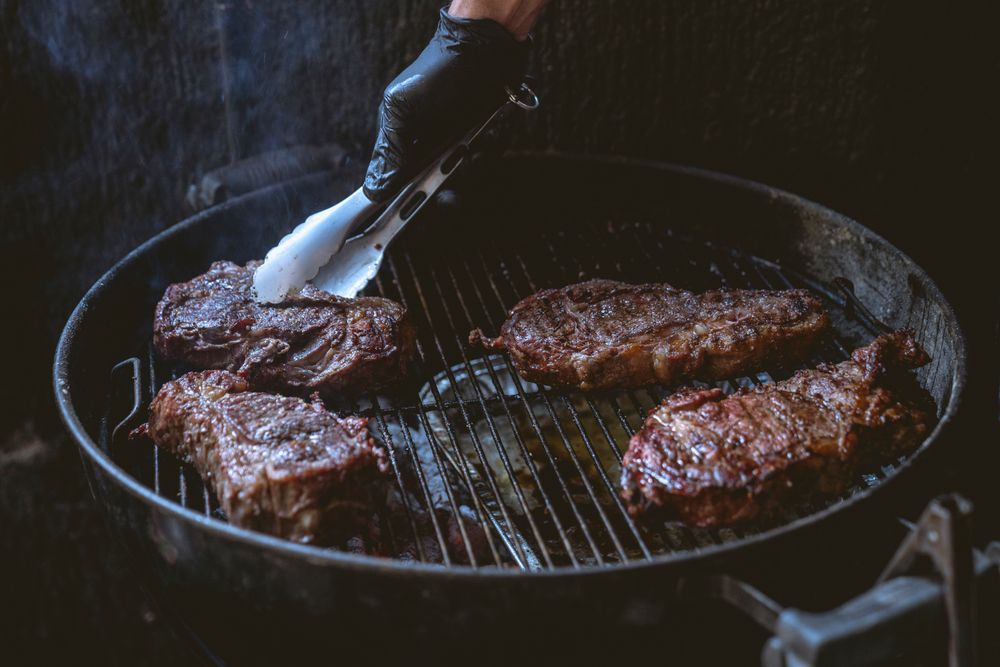
 Steak
Reverse Seared Ribeye on a Charcoal Grill
The technique that makes a thick steak behave. Gentle indirect heat first, a savage sear last, and the grey band disappears.
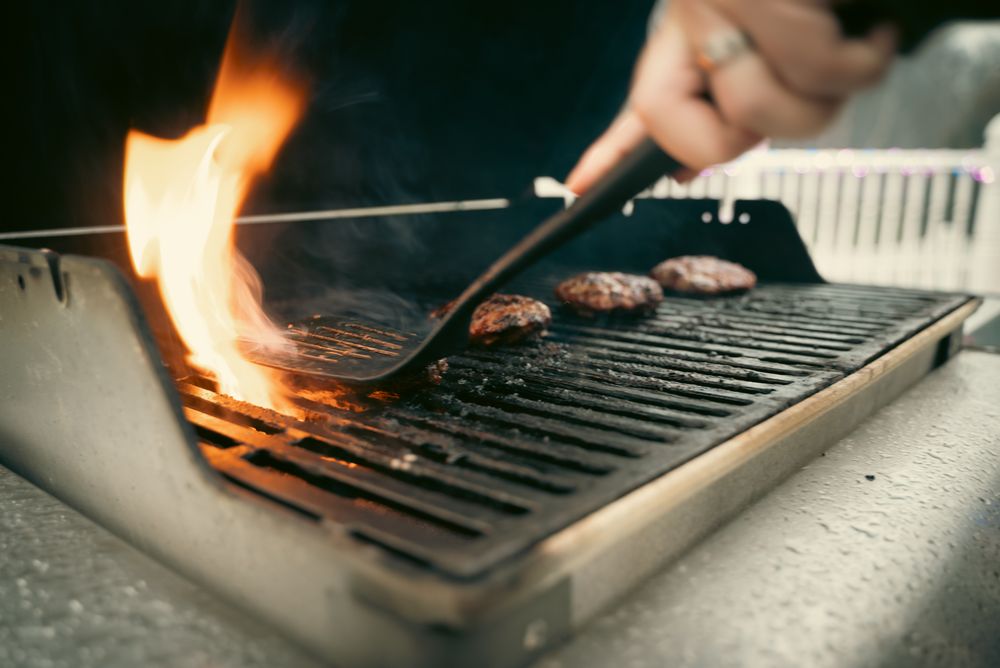 Burgers
Charcoal Smash Burgers
A smash burger is a crust delivery system. That needs a flat, screaming hot surface, which means a griddle or cast iron pan set directly over the coals rather than the bare grate.
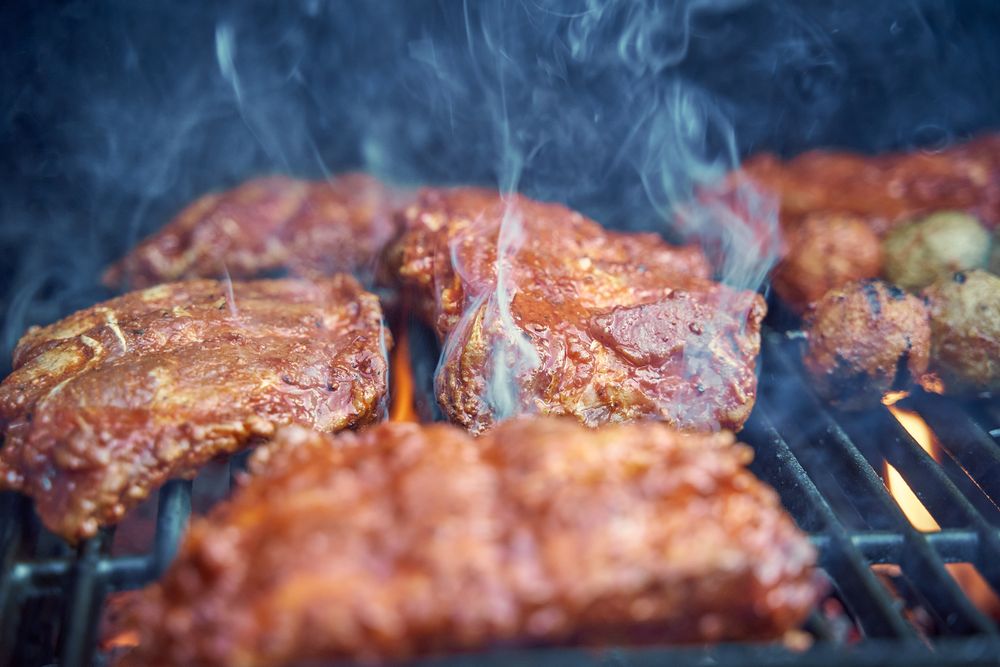 Brisket
 on a Charcoal Grill Using the Snake Method
You do not need a dedicated smoker. A 22 inch kettle and a snake of unlit briquettes will hold 120°C (250°F) for ten hours, which is all a brisket has ever asked for.
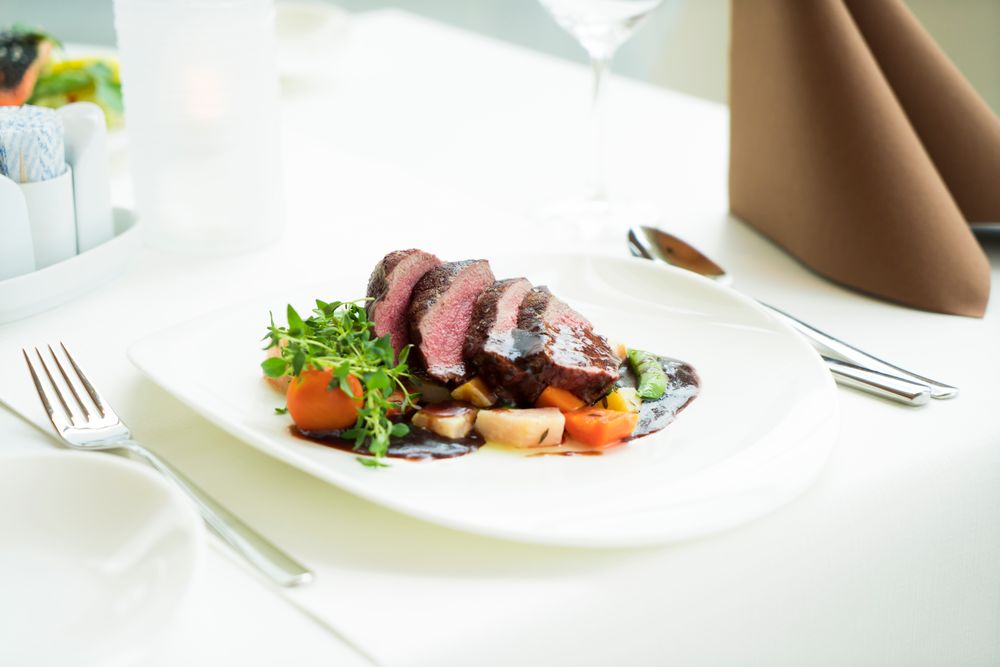 Steak
Santa Maria Tri-Tip Over Coals
California's contribution to live-fire cooking: a whole tri-tip, salt pepper and garlic, cooked over red oak and sliced across two different grains.
Short ribSmoked Beef Short Ribs
Brisket flavour on a bone, and considerably harder to ruin. Plate short ribs are the single most impressive thing you can put on a charcoal cooker.
 Steak
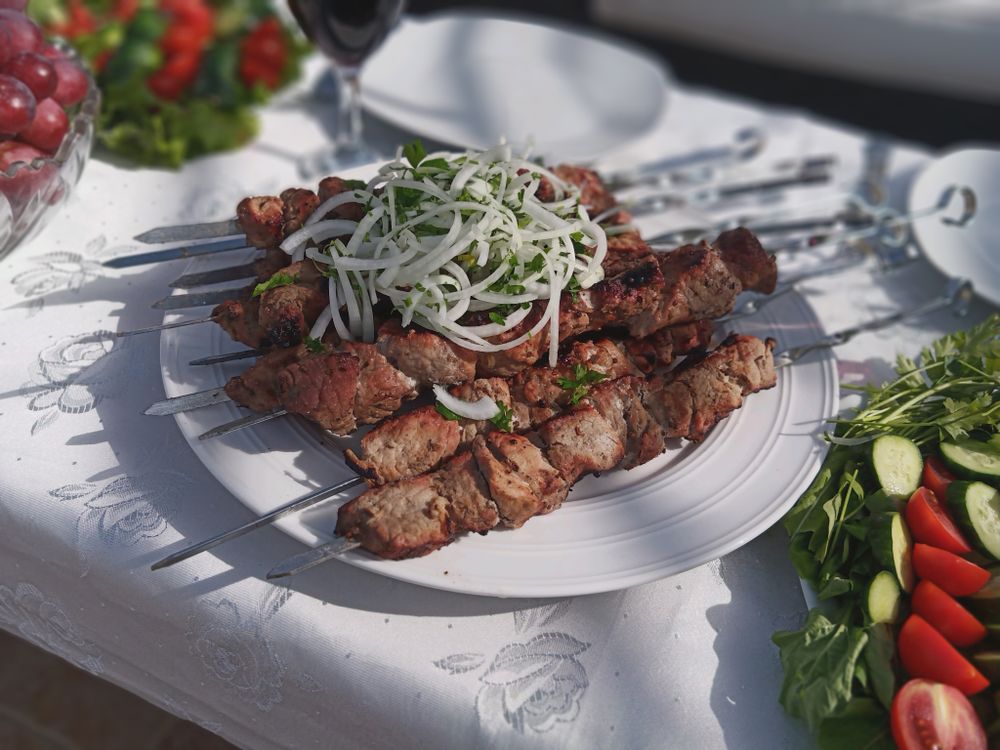
Picanha Skewers Over Charcoal
The Brazilian churrasco cut, bent into a C on a skewer so the fat cap faces out and bastes the meat as it renders.
 Short rib
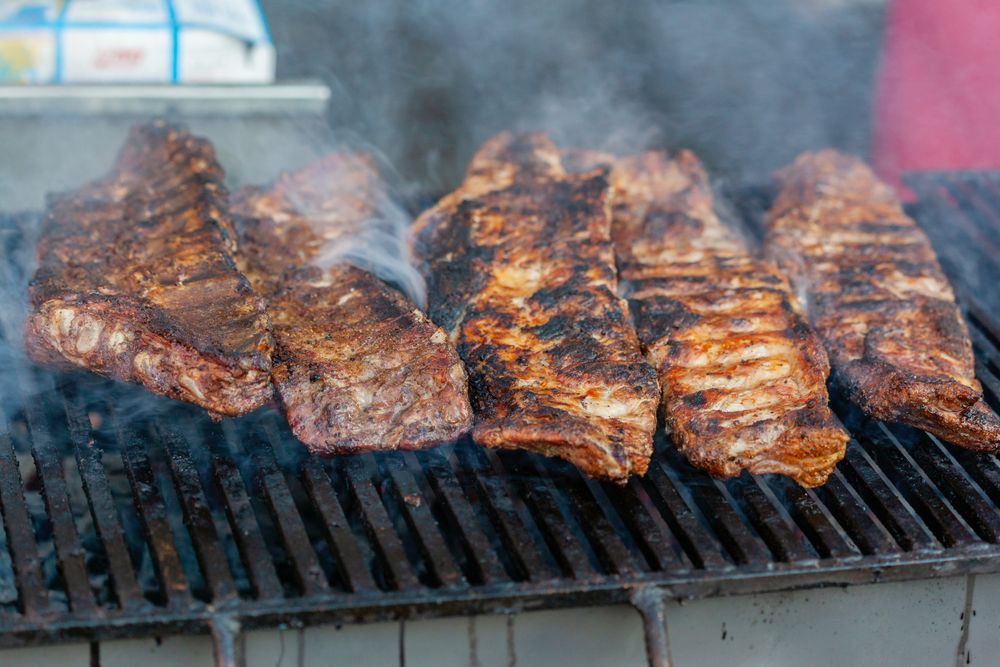
Korean Galbi, LA-Cut Short Ribs
Short ribs cut thin across the bone so they cook in minutes. The marinade uses pear, which genuinely tenderises rather than just flavouring.
 Sausages
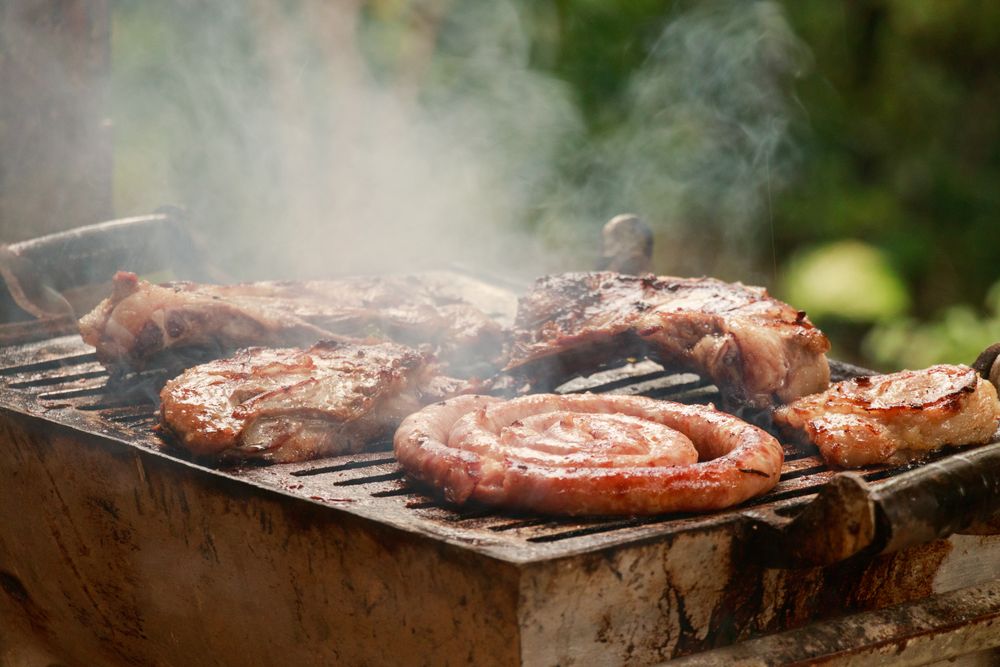
Boerewors on the Braai
A single continuous coil of coarse beef sausage spiced with coriander and clove. The rules are simple: never prick it, never rush it, and never cut the coil.
Short ribAsado de Tira Over Embers
Argentinian cross-cut short ribs cooked slowly over embers rather than flame, seasoned with nothing but coarse salt. Patience is the entire recipe.
SteakGrilled Skirt Steak with Chimichurri
Skirt is the most flavourful cheap steak there is, and it wants one thing: a screaming fire and about two minutes a side.
SteakCarne Asada, Mexican Grilled Steak
Mexico's great grilled beef: thin steak marinated in lime, orange, garlic and chilli, seared hard and chopped for tacos. Bright, smoky and fast.
Short ribSmoked Beef Cheeks
The hardest-working muscle on the animal becomes the most tender thing on the plate. Beef cheeks are pure collagen, and low slow smoke turns them to silk.
Why beef suits charcoal
Charcoal-grilled meat tastes different for two reasons, and beef shows both of them more than anything else. The first is heat. A bed of charcoal gets the grate past 370°C (700°F), which browns the outside of a steak quickly while the middle stays pink. The second is fat. Beef fat drips onto the glowing coals, burns off as smoke and rises back through the meat. That is the flavour people mean by charbroiled or charcoal-broiled meat. We explain both in charcoal vs gas and the Maillard reaction.
Which beef cut needs which fire
Beef cuts fall into three groups on a charcoal grill, and the group decides the fire.
| Cut | Fire | Grill temperature | Cook to |
|---|---|---|---|
| Thin steaks: skirt, flank, sirloin, rump, carne asada | Direct, over a full bed of coals | 290°C (550°F) and above | 55°C (130°F) for medium rare |
| Thick steaks: ribeye, T-bone, tri-tip | Two-zone, reverse sear | 120°C (250°F), then 290°C (550°F)+ to sear | 55°C (130°F) for medium rare |
| Burgers | Direct on a hot plate for smash burgers, two-zone for thick ones | 230°C (450°F) and above | 70°C (160°F) |
| Skewers and picanha | Direct | 230 to 290°C (450 to 550°F) | 55°C (130°F) for medium rare |
| Brisket, short rib, beef cheeks | Snake or Minion, low and slow | 105 to 135°C (225 to 275°F) | 95°C (203°F) and probe tender |
Thin cuts cook through before they can burn, so they go straight over the coals and come off in minutes. Thick steaks need the gentle side of a two-zone fire first, then a minute or so a side over the coals, which is the reverse sear. Tough cuts with a lot of connective tissue need hours at a low temperature, so they are cooked with a slow-burning fire such as the snake method.
How much charcoal to use for steak
For searing steaks in a 57cm (22 inch) kettle, light a full chimney, roughly 80 to 100 briquettes, and pour it into a deep bed. On a 47cm (18 inch) kettle, three quarters of a chimney is enough, and on a small portable about half. For a reverse sear, start with half a chimney banked to one side for the gentle phase, then add the rest of the coals to build up the searing heat at the end. How much charcoal to use has the amounts for every kind of cook.
When is beef done?
| Beef | Pull it off the grill at |
|---|---|
| Steak, rare | 50°C (120°F) |
| Steak, medium rare | 55°C (130°F) |
| Steak, medium | 60°C (140°F) |
| Burgers and minced beef | 70°C (160°F) |
| Brisket, short rib | 95°C (203°F), and a probe slides in easily |
Steaks keep cooking for a few minutes after they come off the grill, so take them off a little below the doneness you want. These are the same numbers as our charcoal grill temperature guide, which also covers pork, chicken, lamb and fish.
Lump charcoal or briquettes for beef?
Lump charcoal lights faster and burns hotter, which suits searing steaks and skewers. Briquettes burn more steadily and for longer, which suits brisket and short rib. Either works for a two-zone cook. The details are in lump charcoal vs briquettes.
At a glance
| Recipe | Method | Grill temp | Cook time | Pull at |
|---|---|---|---|---|
| Reverse Seared Ribeye on a Charcoal Grill | Reverse sear | 290°C (550°F) and above | 45 min | 55°C (130°F) |
| Charcoal Smash Burgers | Direct heat | 290°C (550°F) and above | 10 min | 70°C (160°F) |
| Brisket on a Charcoal Grill Using the Snake Method | Low and slow smoking | 105 to 135°C (225 to 275°F) | 10 to 14 hr | 95°C (203°F) |
| Santa Maria Tri-Tip Over Coals | Two-zone cooking | 230 to 290°C (450 to 550°F) | 35 min | 55°C (130°F) |
| Smoked Beef Short Ribs | Low and slow smoking | 105 to 135°C (225 to 275°F) | 7 to 9 hr | 95°C (203°F) |
| Picanha Skewers Over Charcoal | Direct heat | 230 to 290°C (450 to 550°F) | 20 min | 55°C (130°F) |
| Korean Galbi, LA-Cut Short Ribs | Direct heat | 230 to 290°C (450 to 550°F) | 8 min | Cooked through |
| Boerewors on the Braai | Two-zone cooking | 175 to 230°C (350 to 450°F) | 20 min | 70°C (160°F) |
| Asado de Tira Over Embers | Direct heat | 175 to 230°C (350 to 450°F) | 50 min | Cooked through |
| Grilled Skirt Steak with Chimichurri | Direct heat | 290°C (550°F) and above | 8 min | 55°C (130°F) |
| Carne Asada, Mexican Grilled Steak | Direct heat | 290°C (550°F) and above | 8 min | 55°C (130°F) |
| Smoked Beef Cheeks | Low and slow smoking | 105 to 135°C (225 to 275°F) | 6 hr | 95°C (205°F) |
Techniques used
Direct heat. Food straight over the coals. Fast, fierce, and finished before the inside overcooks. Reverse sear. Bring it up slowly on the cool side, then sear hard at the end. Edge to edge pink with a hard crust. Low and slow smoking. Hours at 105°C (225°F) to 150°C (300°F) with wood on the coals. Collagen melts, bark forms. Two-zone cooking. Coals banked to one side: a searing zone and a gentle zone in one grill. The single most useful technique in charcoal cooking.
Cookers these suit
Asado grills. Bullet smokers. Drum smokers. Kamado grills. Kettle grills. Korean table grills. Offset smokers. Portable grills.
Common questions
How much charcoal do I need for steak?
A full chimney, roughly 80 to 100 briquettes, for searing in a 57cm (22 inch) kettle. Three quarters of a chimney in a 47cm (18 inch) kettle and about half in a small portable.
What temperature should a charcoal grill be for steak?
290°C (550°F) or higher at the grate for the sear. Thick steaks are best cooked at 120°C (250°F) on the cool side first, then seared.
Is lump charcoal or briquettes better for beef?
Lump for searing steaks, because it burns hotter. Briquettes for long cooks like brisket, because they burn more steadily.
What does charbroiled mean?
Cooked over the open heat of charcoal, so the outside browns and chars and the fat that drips onto the coals adds a smoky flavour.