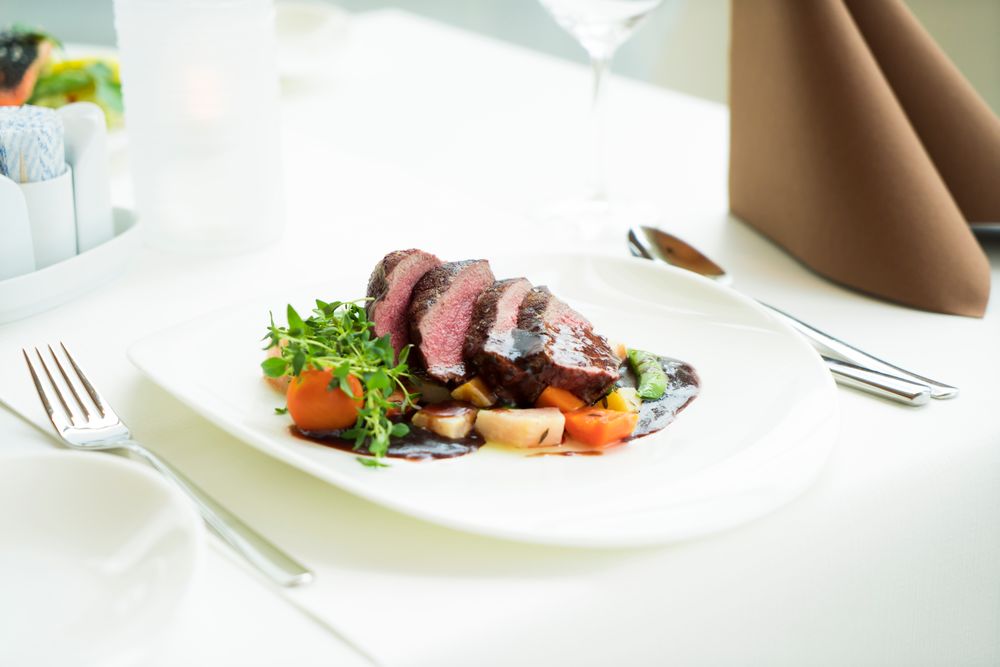
Season a 2 to 3 lb tri-tip with salt, pepper and garlic. Cook on the indirect side at around 150°C (300°F) to an internal 50°C (120°F), roughly 25 minutes, then sear directly over the coals 3 to 4 minutes a side to 55°C (130°F). Rest 10 minutes and slice against the grain, changing angle at the join.
Two-zone with a generous bank of coals. Red oak chunks if you can get them, which is the traditional wood.
Method
Season and rest
Mix the salt, pepper and garlic powder and coat the tri-tip all over, pressing it in. Leave at room temperature for 30 minutes. This is the entire traditional Santa Maria seasoning and it does not want improving.
Two-zone fire, oak on the coals
Bank a full chimney of coals to one side. Add the oak chunks. Aim for around 150°C (300°F) on the indirect side, which is hotter than barbecue and cooler than grilling, and is what makes tri-tip work.
Indirect first, fat cap up
Put the tri-tip on the cool side with the fat cap facing up and the lid vent above it. Cook to an internal 50°C (120°F), about 25 minutes for a 2.5 lb piece. The thin end will always be more done than the thick end; probe the thickest part.
Sear over the coals
Move it directly over the bank. Three to four minutes a side, turning when it is deeply coloured, until it reads 55°C (130°F) for medium rare. The garlic in the rub will want to catch, so keep it moving if you see it darkening fast.
Rest, then find the grain change
Rest 10 minutes. A tri-tip is two muscles meeting at roughly a right angle, so there is no single grain direction. Find the seam where it changes, cut the roast in two along it, then slice each piece against its own grain. Get this wrong and it eats tough no matter how well you cooked it.
Notes worth knowing
- Red oak is the traditional Santa Maria wood and is worth seeking out. Regular oak is a close second, and post oak works well too.
- Tri-tip is lean. Past medium it dries out quickly, so 55°C (130°F) to 55°C (135°F) is the useful window.
- Leftovers make the best steak sandwiches of any cut, sliced thin and cold.
Common questions
What is tri-tip?
A triangular muscle from the bottom sirloin, roughly 2 to 3 lb. It is common in California and increasingly available elsewhere. Ask a butcher for bottom sirloin butt if the name is unfamiliar.
Why does the grain direction matter so much here?
Two muscle groups meet inside a tri-tip at nearly ninety degrees. Slicing the whole roast in one direction means half of it is cut with the grain and will be chewy. Splitting at the seam first solves it.
Cook these next
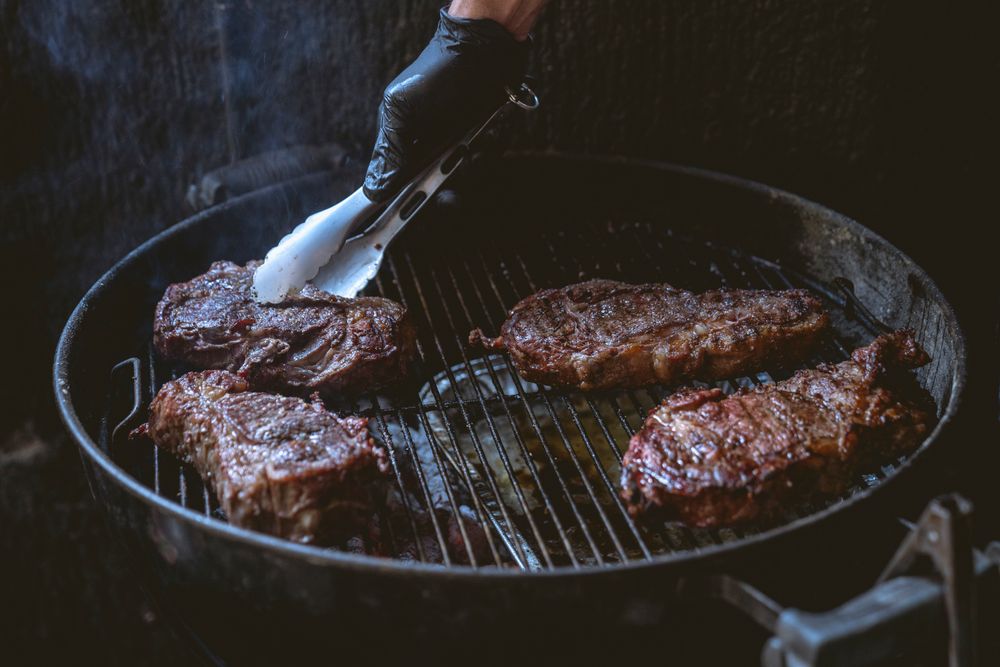 Steak
SteakReverse Seared Ribeye on a Charcoal Grill
The technique that makes a thick steak behave. Gentle indirect heat first, a savage sear last, and the grey band disappears.
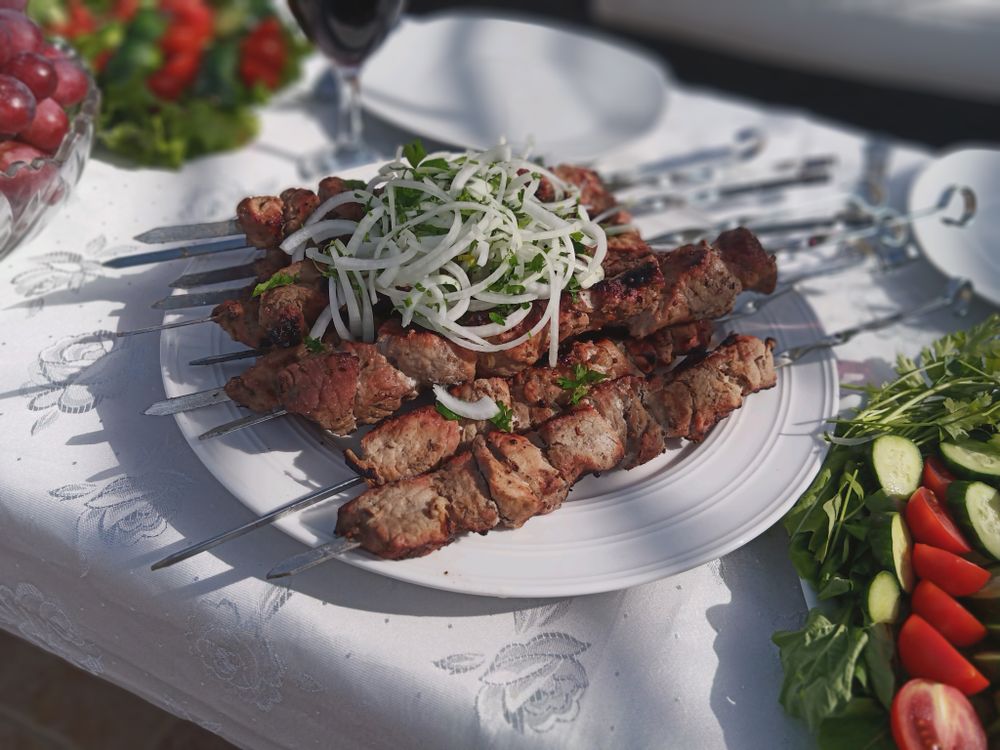 Steak
SteakPicanha Skewers Over Charcoal
The Brazilian churrasco cut, bent into a C on a skewer so the fat cap faces out and bastes the meat as it renders.
SteakGrilled Skirt Steak with Chimichurri
Skirt is the most flavourful cheap steak there is, and it wants one thing: a screaming fire and about two minutes a side.