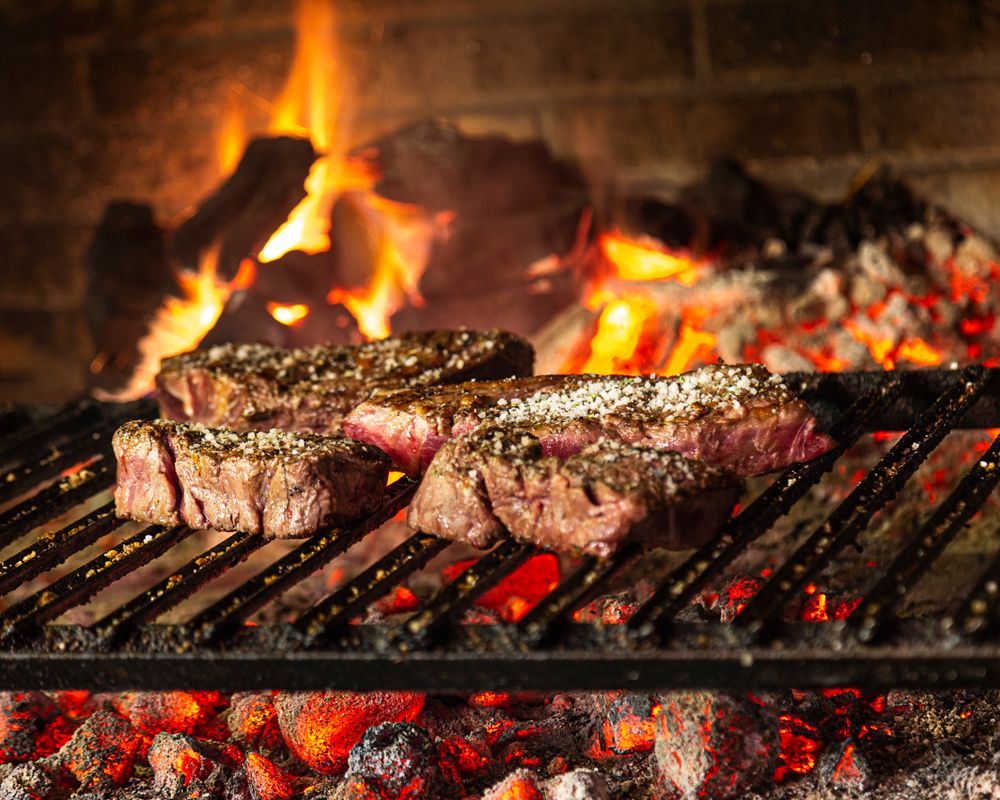
Low and slow is 105°C (225°F) to 135°C (275°F) for barbecue. Smoke roast is 135°C (275°F) to 175°C (350°F) for skin and hot-fast barbecue. Medium is 175°C (350°F) to 230°C (450°F), the everyday working heat. High is 230°C (450°F) to 290°C (550°F) for grill marks. White hot is 290°C (550°F) and above, for searing only.
Target internal temperatures
Grill temperature gets you there; internal temperature tells you when you have arrived. These are the numbers that actually decide whether dinner is good.
| Food | Pull at | Notes |
|---|---|---|
| Beef steak, rare | 50°C (120°F) | Add 5°F of carryover |
| Beef steak, medium rare | 55°C (130°F) | The default target |
| Beef steak, medium | 60°C (140°F) | |
| Burgers, ground beef | 70°C (160°F) | Ground meat, cook through |
| Brisket, short rib, pulled pork | 95°C (203°F) | Probe tender matters more than the number |
| Pork chops and loin | 65°C (145°F) | Faintly pink is correct |
| Pork ribs | 90°C (195°F) to 95°C (203°F) | Bend test is the real test |
| Chicken breast | 75°C (165°F) | Pull at 70°C (160°F) for carryover |
| Chicken thigh and leg | 80°C (175°F) to 85°C (185°F) | Better above 75°C (165°F), not worse |
| Whole chicken | 75°C (165°F) breast, 80°C (175°F) thigh | |
| Lamb, medium rare | 55°C (130°F) | |
| Salmon | 50°C (125°F) to 55°C (130°F) | Published guidance is 65°C (145°F) |
| White fish | 55°C (130°F) to 55°C (135°F) | Flakes and goes opaque |
| Prawns | 50°C (120°F) | Loose C shape, not a tight O |
How do I know the grill temperature without a thermometer?
The hand test. Hold your palm five inches above the grate and count how long you can hold it there. One to two seconds is white hot, two to four is high, four to six is medium, six to eight is medium low, eight to ten is low. Calibrate it against a probe a few times and it becomes genuinely reliable.
Why is my grate temperature different to the lid thermometer?
Because they are measuring different things. A lid thermometer measures air at the top of the dome, several inches above and away from the food, and on most kettles it reads -5°C (25°F) to 10°C (50°F) away from grate level. It is also usually uncalibrated. Clip a probe to the grate beside the food and use that number.
Food keeps cooking after it leaves the fire, as heat travels inward from the hot surface. A thick steak climbs 5°F to -10°C (10°F) while resting; a whole shoulder can climb more. Pull food below your target, not at it. This single habit fixes more overcooked meat than any other.
Common questions
What temperature should a charcoal grill be for steak?
290°C (550°F) or higher at the grate for the sear. For anything over an inch and a quarter thick, cook it first at 120°C (250°F) on the indirect side and sear at the end, which is the reverse sear.
What temperature for low and slow barbecue?
105°C (225°F) to 135°C (275°F). Lower is traditional, 135°C (275°F) is faster and the difference in the finished food is smaller than people claim. Ribs in particular are better at 135°C (275°F).
Is 105°C (225°F) always better than 135°C (275°F)?
No. 105°C (225°F) suits large fatty cuts with a lot of collagen and plenty of time. 135°C (275°F) suits leaner or smaller cuts like baby back ribs and poultry, which dry out before they tenderise at lower heat.
Related guides
 Technique
How to Light Charcoal Without Lighter Fluid
There is one right way to light charcoal, it costs about twenty five dollars, and it takes fifteen minutes.
 Technique
How to Set Up a Two-Zone Fire
One fire, two temperatures, and suddenly a charcoal grill can do everything an oven and a frying pan can do together.
 Technique
The Snake Method: Low and Slow on a Kettle
A line of unlit briquettes, lit at one end, burning along at about an inch an hour. It is the cheapest smoker you will ever build and it is already inside your kettle.