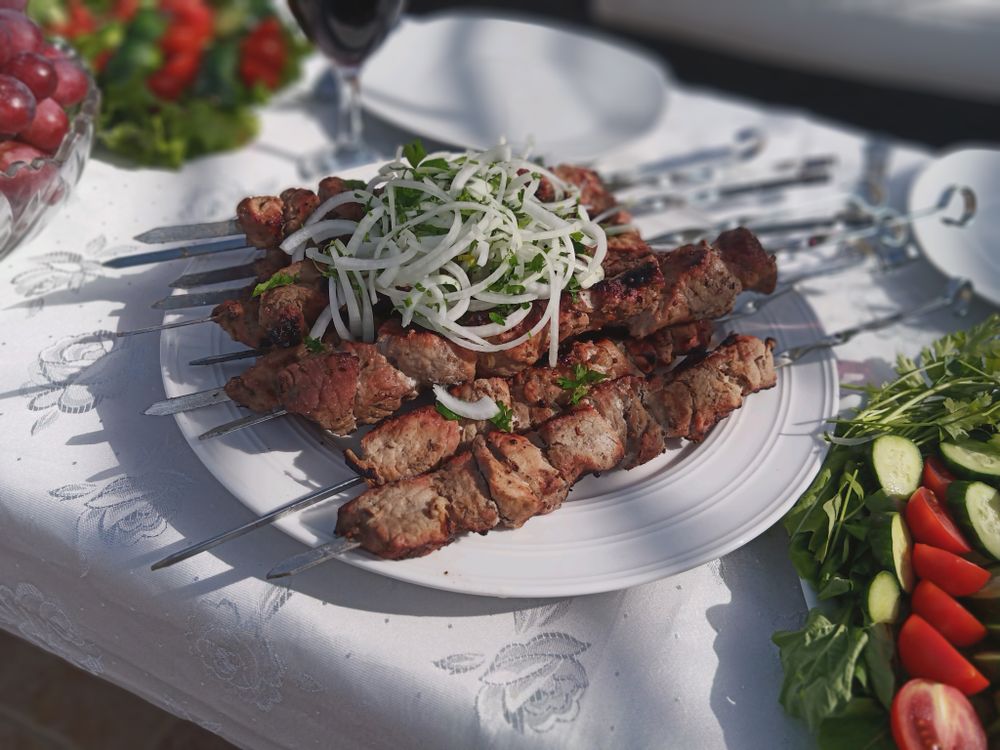
Cut a picanha into 1.5 inch thick strips against the grain, bend each into a C with the fat cap outward and skewer. Cook over a hot bed, fat side to the fire first, turning every few minutes for about 20 minutes to 55°C (130°F). Salt is the only seasoning.
Method
Do not trim the fat cap
The fat cap is the entire point of this cut. Score it in a diamond pattern about a quarter inch deep, cutting through the fat but not into the meat, so it renders evenly and does not contract into a dome.
Cut and skewer
Slice the picanha against the grain into strips about 1.5 inches thick, each with a full section of fat cap along one edge. Bend each strip into a C shape with the fat on the outside curve, and thread two or three onto a long skewer, pressed together.
Salt only
Coat generously with coarse rock salt, pressing it into the fat and the cut faces. Traditional churrasco uses nothing else, and with this cut nothing else is needed. Knock off any excess before it goes on.
Fat to the fire first
Lay the skewers over the hot bed with the fat cap facing down. Give it four or five minutes to render and colour, which is the step that produces all the flavour. Expect flare-ups as fat drips, and simply move the skewer if flames start licking properly.
Turn and finish
Rotate the skewers every three to four minutes, cooking all faces, for around 20 minutes total, until the fat is crisp and deep brown and the meat reads 55°C (130°F). Rest 5 minutes on the skewer.
Carve at the table
Slide the pieces off and slice each one thinly against the grain, making sure every slice carries a strip of the crisp fat. Serve with farofa, chimichurri or simply more salt.
Notes worth knowing
- Ask for rump cap, coulotte or top sirloin cap if picanha is not on the board. It should weigh 2 to 3 lb with a fat cap at least a quarter inch thick.
- Anything over 3.5 lb has usually had part of the rump left attached, which is a different, tougher muscle.
- Rock salt rather than fine salt. It sits on the surface, seasons the crust and falls away rather than making the meat salty through.
Common questions
Can I cook picanha as a whole roast instead?
Yes, reverse sear it whole to 55°C (130°F) with the fat cap scored and facing up, then sear the fat side hard at the end. Skewering is faster and gets more crisp fat per bite.
Which way does the grain run?
Along the length of the cut, running the same direction as the long axis. Cut your thick strips across it, then slice the cooked strips across it again.
Cook these next
 Steak
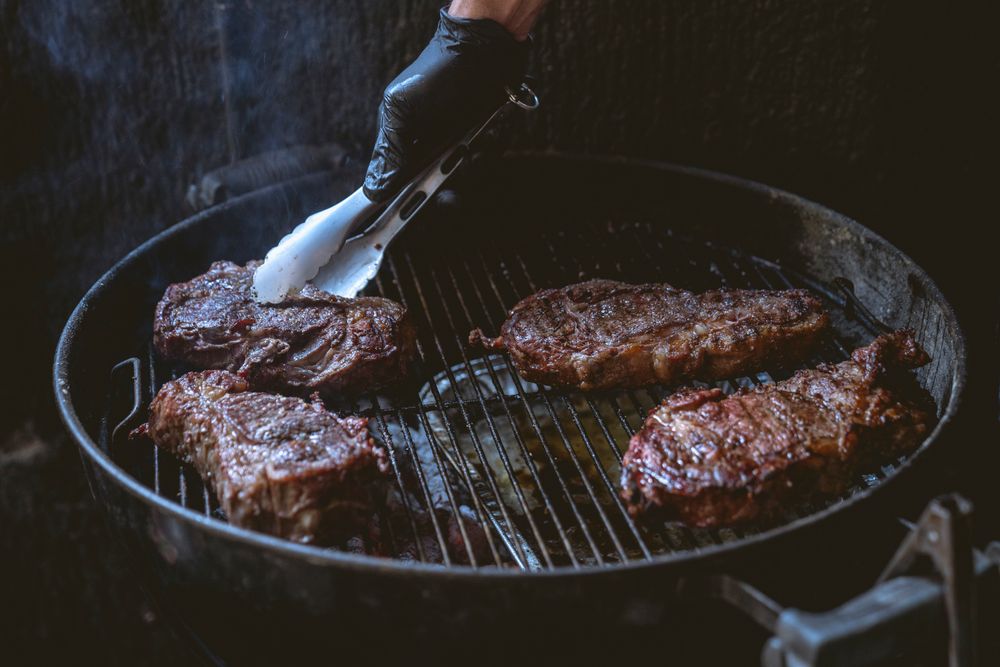
SteakReverse Seared Ribeye on a Charcoal Grill
The technique that makes a thick steak behave. Gentle indirect heat first, a savage sear last, and the grey band disappears.
 Steak
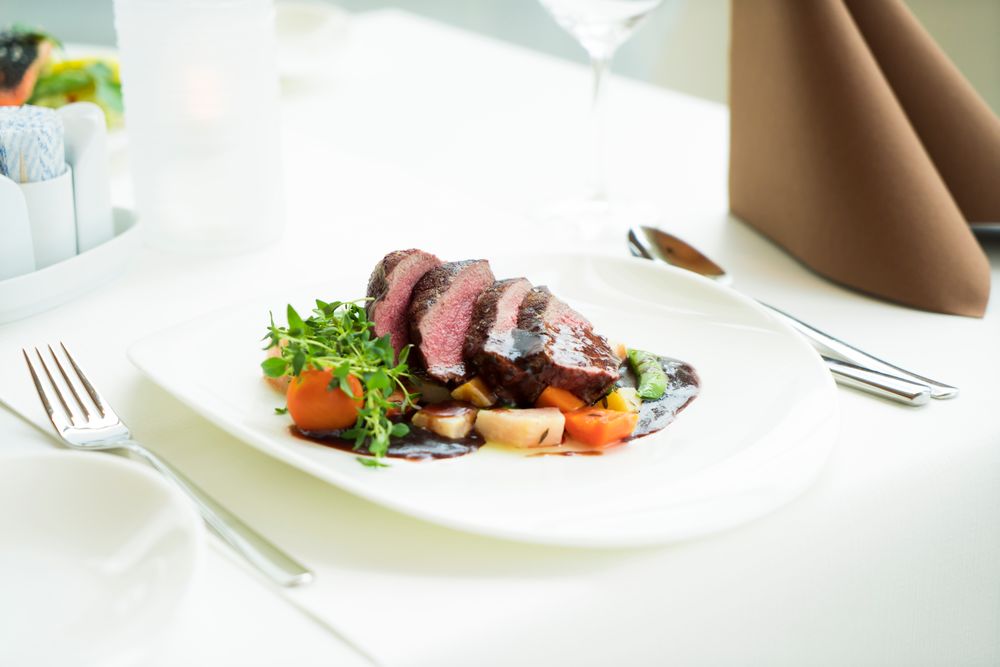
SteakSanta Maria Tri-Tip Over Coals
California's contribution to live-fire cooking: a whole tri-tip, salt pepper and garlic, cooked over red oak and sliced across two different grains.
 Skewers
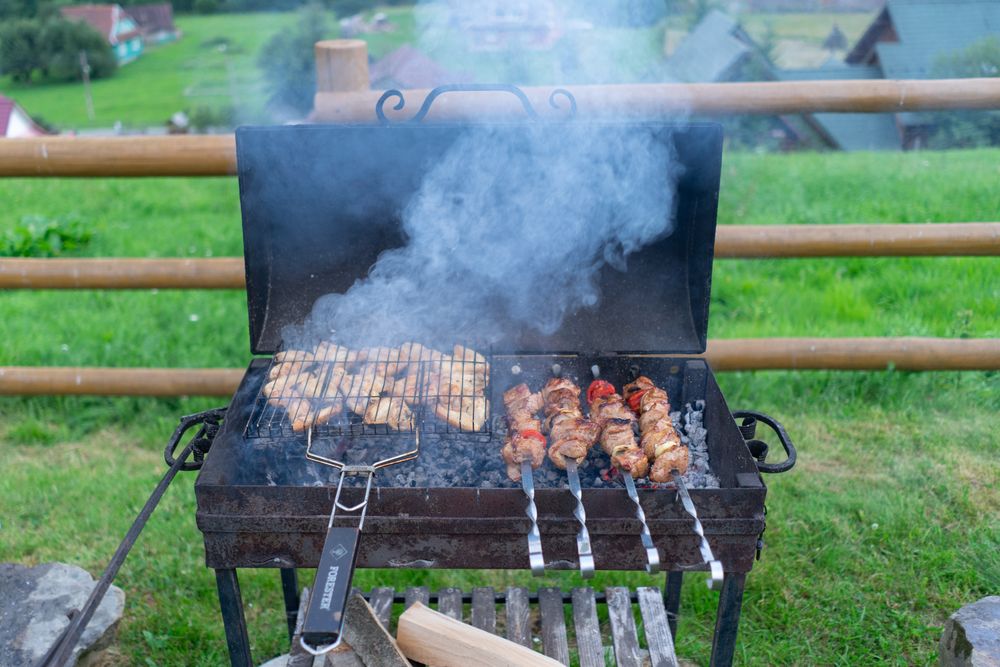
Yakitori Over Binchotan
Small skewers, a narrow bed of coals and no lid. Yakitori is charcoal cooking reduced to its essentials, which is exactly why the fuel matters so much.