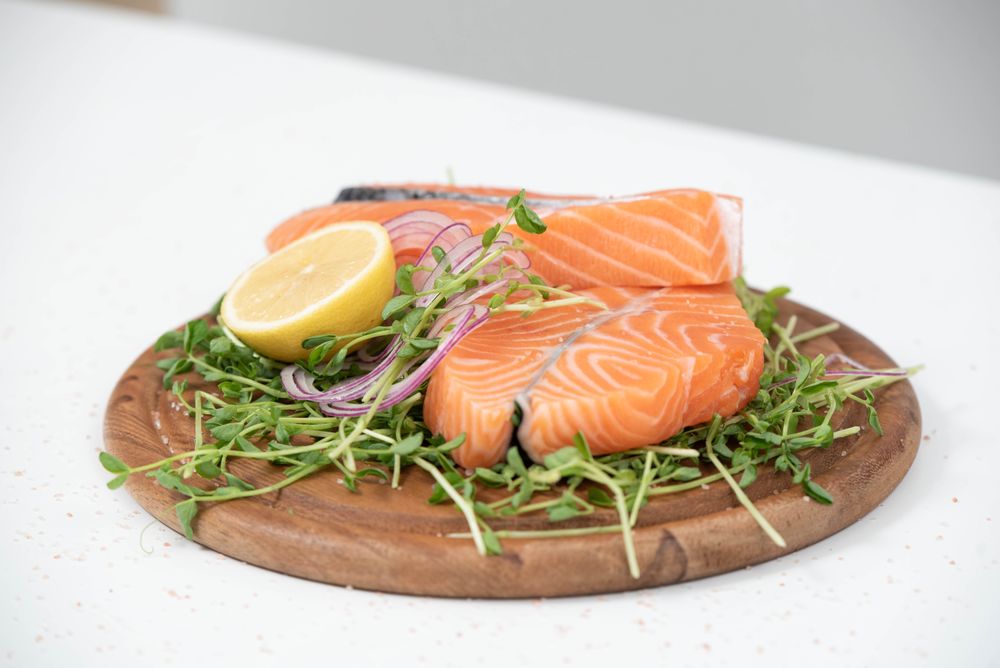
Dry the fillets hard, oil the skin, and cook skin side down over moderate direct heat for 8 to 10 minutes without moving them. Finish flesh side down for 60 seconds only, or not at all. Pull at 50°C (125°F) for medium.
Two-zone with a moderate bank, so you have somewhere to move the fish if flare-ups start.
Method
Dry the skin and salt it
Pat the skin bone dry and salt it lightly ten minutes before cooking, then blot again. Dry salted skin is what crisps; damp skin welds itself to the grate.
Set a moderate two-zone fire
You do not want a searing bed here. Aim for medium direct heat where you can hold a hand five inches above for four or five seconds, with a clear cool side to retreat to.
Skin side down, and leave it
Oil the skin, lay the fillets skin down over the coals, and do not touch them for eight to ten minutes. Almost all the cooking happens through the skin, which insulates the flesh and lets it come up gently. You will see the opacity climb up the side of the fillet.
Glaze in the last three minutes, if using
Brush the honey and soy glaze on only near the end. Sugar over coals burns fast, and three minutes is enough for it to set and lacquer.
Flip briefly or not at all
When the flesh is opaque roughly three quarters of the way up, either pull it as is, or give it sixty seconds flesh side down for colour. Longer than that and the flesh dries.
Pull at 50°C (125°F)
50°C (125°F) gives a moist, just-translucent centre. 55°C (130°F) is firmer and still good. Past 60°C (140°F) it is dry and the white albumin will have squeezed out onto the surface.
Notes worth knowing
- Buy centre-cut fillets of even thickness. Thin tail pieces will be overcooked long before a thick fillet is ready.
- If the skin sticks, it is not finished crisping. Wait, do not force it.
- Cook salmon before anything fatty goes on the grate, and scrub the bars hot first.
Common questions
Should I cook salmon skin side down the whole time?
Largely yes. The skin acts as a protective layer and a heat buffer, so it lets you use direct heat without shocking the flesh. A brief flip is optional and mostly cosmetic.
Is 50°C (125°F) safe for salmon?
The published guidance for fish is 65°C (145°F), which produces firm, dry salmon. Most cooks and restaurants serve it at 50°C (120°F) to 55°C (130°F). If you are serving anyone pregnant, elderly, very young or immunocompromised, follow the 65°C (145°F) guidance.
Cook these next
FilletsSeared Tuna Steak on Charcoal
Tuna is a steak that happens to come from the sea. Treat it like one: a fierce fire, ninety seconds a side, and a raw ruby centre.
 Whole fish
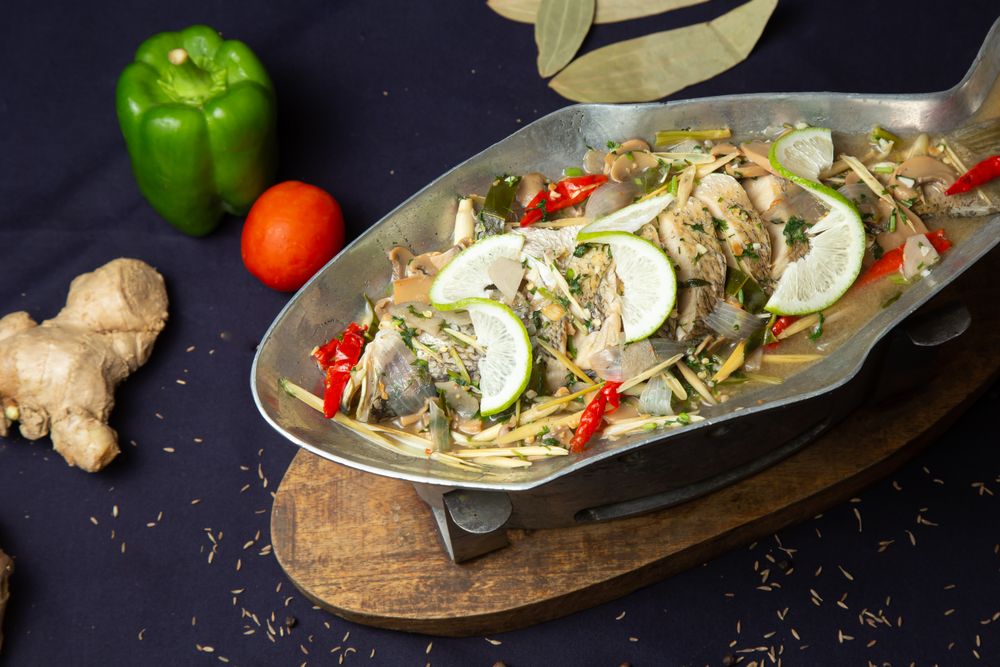
Whole Fish Grilled Over Charcoal
A whole fish over coals is the simplest good thing you can cook, and the skin sticking to the grate is the only real obstacle.
 Shellfish
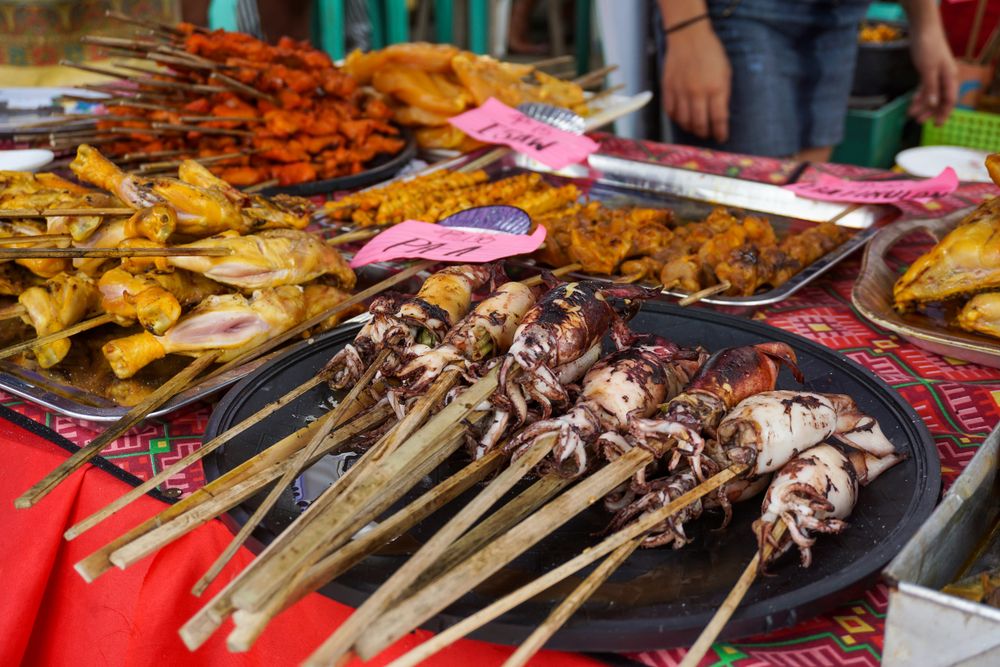
Charcoal Grilled Octopus
Octopus needs two entirely different cooking processes: a long gentle simmer to tenderise, then a violent short char. Skip either and you get rubber.