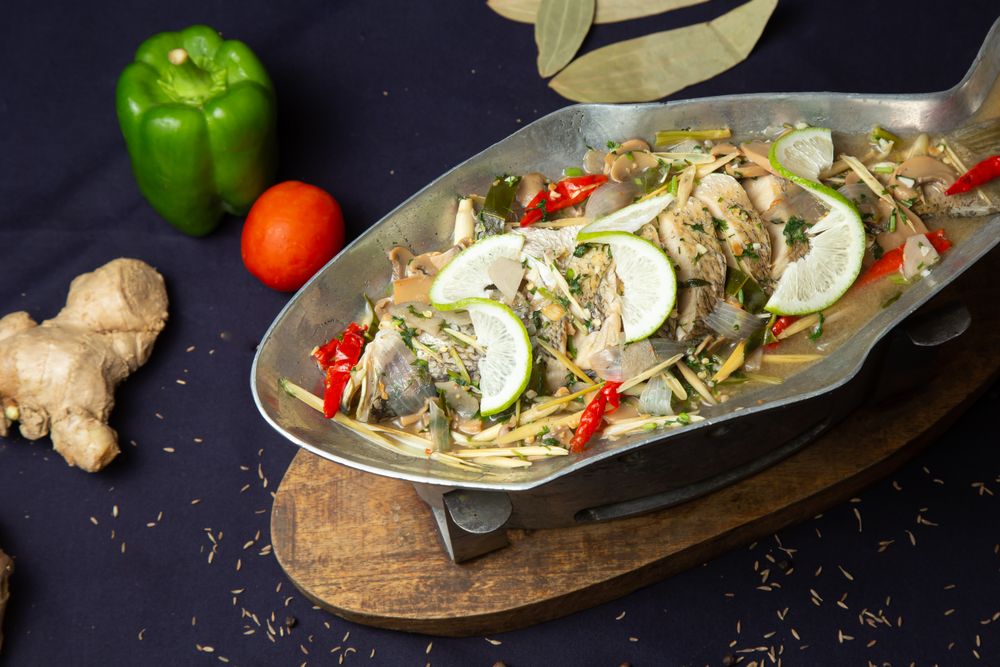
Score a whole sea bass or bream, oil the fish rather than the grate, and cook over a moderate bed for 6 to 8 minutes a side. Flip once, only when the skin releases on its own. Done at 55°C (130°F) to 55°C (135°F) at the spine.
Moderate even bed, coals just barely covered in grey ash. Grate scrubbed and screaming hot before the fish goes on.
Method
Dry the fish thoroughly
Pat the fish completely dry inside and out, including the cavity. Wet skin sticks and steams. This matters more than anything else in this recipe.
Score and stuff
Cut three or four diagonal slashes through the skin into the flesh on each side. This helps it cook evenly and lets you judge doneness at a glance. Fill the cavity with lemon slices and herbs, and season inside and out.
Oil the fish, not the grate
Rub oil over the skin and into the scores. Oiling the grate mostly burns off before the fish arrives; oil on the fish is what actually prevents sticking. Scrub the grate hard and let it get properly hot first.
Moderate heat, not fierce
A raging fire will burn the skin before the middle warms through. Aim for a bed where you can hold a hand five inches above for four or five seconds. Fish are thin and cook fast.
Do not touch it for six minutes
Lay the fish down and leave it. Skin sticks when it goes on and releases as it crisps. If it resists when you try to lift it, it is not ready; give it another minute and it will let go by itself.
Flip once, using two spatulas
Slide two spatulas under and turn it in one confident movement. Another six to eight minutes on the second side. Total time is roughly ten minutes per inch of thickness at the thickest point.
Check at the spine
The flesh at the deepest score should be opaque and lift cleanly from the bone, at around 55°C (130°F) to 55°C (135°F). Serve with the second lemon and good olive oil.
Notes worth knowing
- A fish basket removes the sticking problem entirely and is worth owning if you cook fish often. Oil the basket, not just the fish.
- Sea bass, bream, snapper, mackerel and trout all work. Very oily fish like mackerel are the most forgiving of the lot.
- Cook fish first, before anything fatty. A grate coated in burnt pork fat is what fish skin sticks to.
Common questions
How do I stop fish sticking to the grill?
Three things together: a scrupulously clean grate, a properly hot grate, and oil on dry fish skin rather than on the bars. Then leave it alone. Almost all sticking is caused by trying to move it too early.
Should I cook fish with the lid on or off?
Off, for a whole fish this size. It cooks fast enough not to need convected heat, and the lid traps moisture that softens the skin you are trying to crisp.
Cook these next
Whole fishCharcoal Grilled Sardines
The cheapest, most Mediterranean thing you can put over coals. Whole sardines, salt, fierce heat and lemon, eaten with your fingers.
Whole fishWhole Grilled Mackerel
Mackerel is oily, cheap and sustainable, and its richness stands up to fierce heat and sharp flavours better than almost any other fish. Score it, grill it, hit it with something acidic.
 Shellfish
Charcoal Grilled Octopus
Octopus needs two entirely different cooking processes: a long gentle simmer to tenderise, then a violent short char. Skip either and you get rubber.