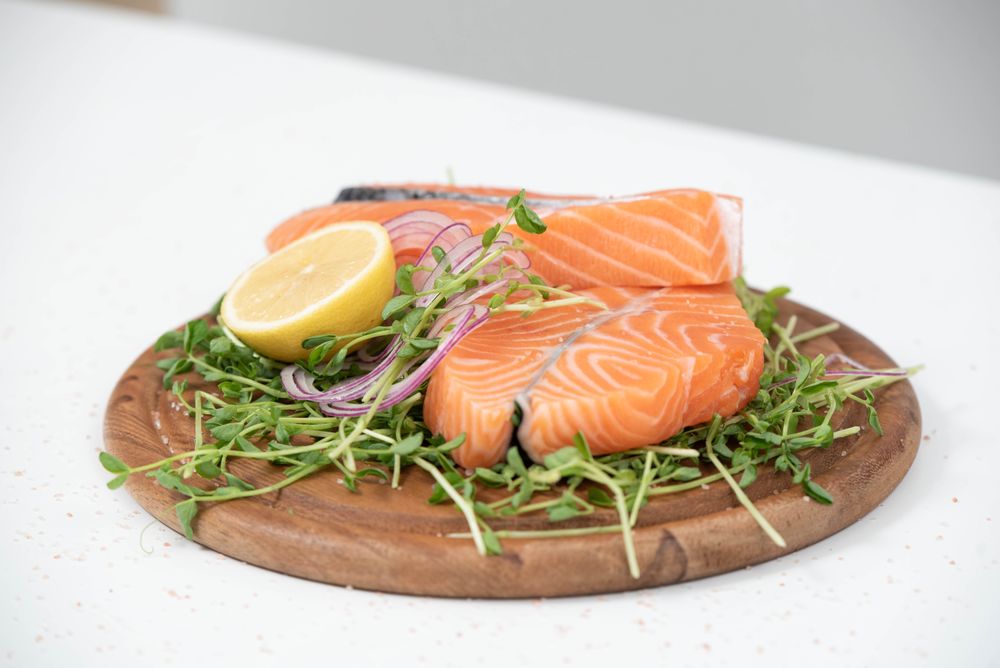
 Fillets
Charcoal Grilled Salmon Fillets
Salmon is fatty enough to survive a charcoal fire and delicate enough to be destroyed by it. The answer is skin-side down over moderate heat, and pulling it earlier than feels right.
FilletsSeared Tuna Steak on Charcoal
Tuna is a steak that happens to come from the sea. Treat it like one: a fierce fire, ninety seconds a side, and a raw ruby centre.
Fatty fish like salmon is robust enough for a live fire and delicate enough to be destroyed by it. The answer is skin side down over moderate direct heat, and pulling it earlier than instinct suggests.
Almost all the cooking happens through the skin, which insulates the flesh and lets it come up gently. Leave it undisturbed and watch the opacity climb the side of the fillet. A brief flip at the end is optional and mostly cosmetic.
Pull salmon at 50°C (125°F) to 55°C (130°F) for a moist centre. The published guidance is 65°C (145°F), which is firm and dry; follow it if you are serving anyone pregnant, elderly, very young or immunocompromised.
At a glance
| Recipe | Method | Grill temp | Cook time | Pull at |
|---|---|---|---|---|
| Charcoal Grilled Salmon Fillets | Two-zone cooking | 175 to 230°C (350 to 450°F) | 12 min | 50°C (125°F) |
| Seared Tuna Steak on Charcoal | Direct heat | 290°C (550°F) and above | 3 min | 45°C (110°F) |
Techniques used
Direct heat. Food straight over the coals. Fast, fierce, and finished before the inside overcooks. Two-zone cooking. Coals banked to one side: a searing zone and a gentle zone in one grill. The single most useful technique in charcoal cooking.