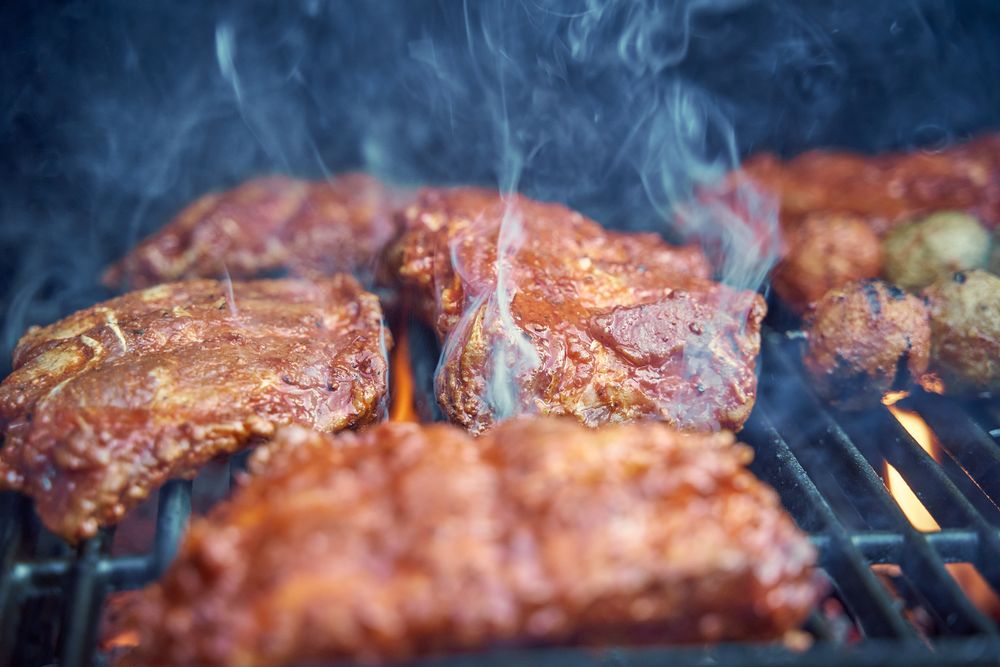
Marinate strips of pork shoulder overnight in hoisin, soy, honey, five-spice and fermented bean curd. Cook indirect at 165°C (325°F) for around an hour, basting with the glaze, until sticky and charred at the edges. Rest and slice.
Method
Cut into strips
Cut the shoulder into long strips about 5cm thick, so there is plenty of surface for the glaze and the char.
Marinate overnight
Mix all the marinade ingredients, reserving some for basting, and coat the pork. Twelve hours or more. The fermented bean curd is traditional and gives the red colour; skip it if you cannot find it.
Indirect at 165°C (325°F)
Two-zone fire with a drip pan under the meat to catch the sugary drips, which will burn on the coals otherwise. Pork on the cool side, lid on.
Baste and turn
Every 15 minutes, brush with the reserved marinade thinned with a little honey, and turn. Around an hour total. Build the glaze in thin layers.
Char and rest
For the last few minutes, move the strips over the coals to catch and blacken at the edges, which is the signature. Rest, then slice thickly.
Notes worth knowing
- A drip pan is essential here; the honey and hoisin will burn to soot if they hit bare coals.
- Char siu is excellent in bao buns, fried rice, or noodle soup the next day.
- Maltose is the traditional glaze sugar for extra gloss; honey is the easy substitute.
Common questions
What cut is best for char siu?
Pork shoulder, for its fat and forgiveness. Pork neck (collar) is the most traditional and the juiciest. Loin is too lean and dries out.
Why is char siu red?
Traditionally from red fermented bean curd or, in restaurants, a little food colouring. You can make excellent char siu without either; it will just be a deeper brown.
Cook these next
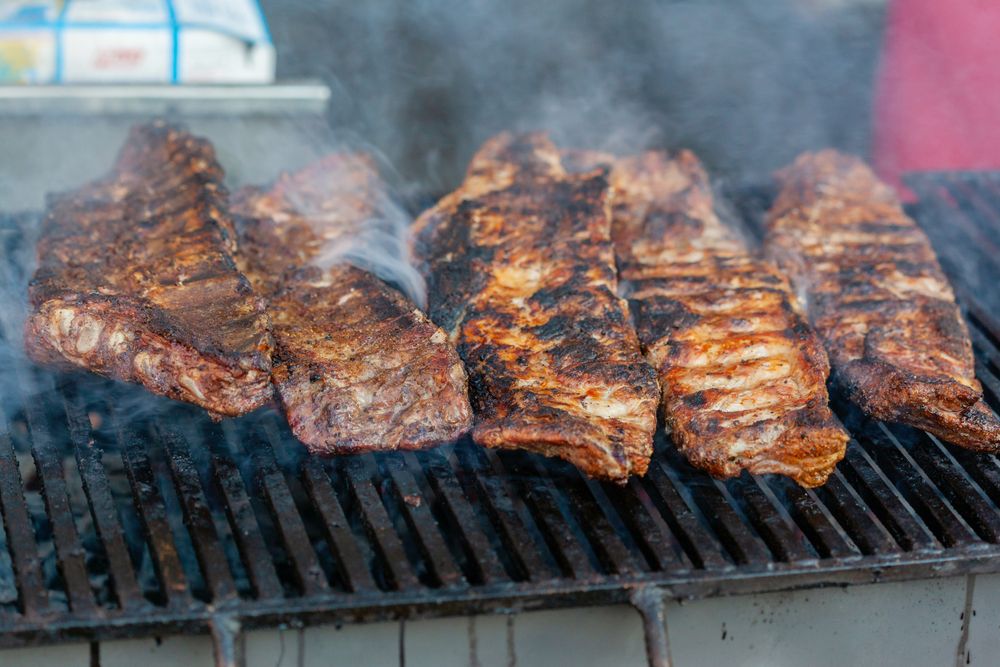 Shoulder
Charcoal Smoked Pulled Pork Shoulder
The most forgiving long cook in barbecue. A pork shoulder has so much fat and connective tissue that it tolerates almost every mistake you can make, which is why it should be your first project cook.
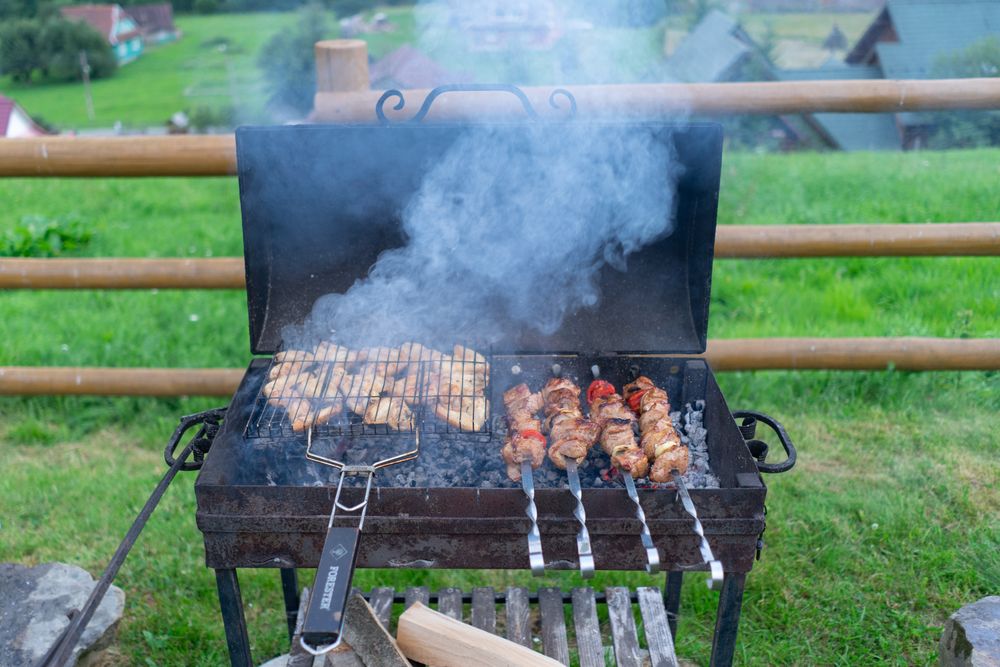 Shoulder
Cypriot Souvla on the Foukou
The Sunday cook of every Cypriot village. Big chunks of pork shoulder turning slowly over charcoal for two and a half hours, seasoned with almost nothing.
ShoulderCuban Lechon Asado
Pork shoulder marinated in mojo, which is sour orange, a great deal of garlic and oregano. Citrus and pork over charcoal, and very little else.