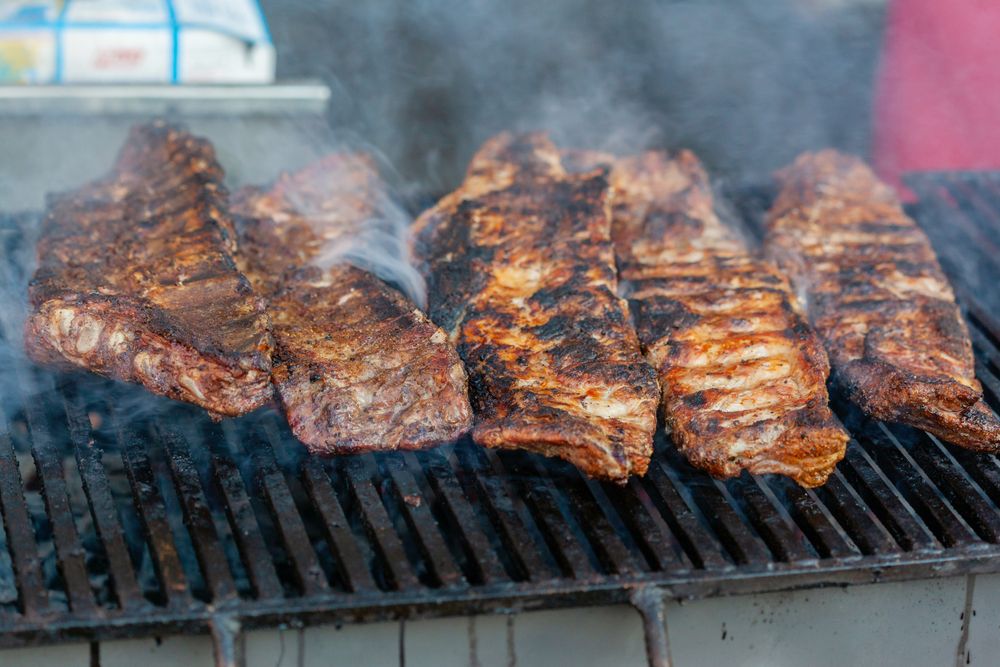
Season an 8 lb bone-in pork butt heavily. Smoke at 120°C (250°F) to 135°C (275°F) for about 8 hours to 75°C (165°F), wrap in foil or paper, then cook to 95°C (203°F), roughly 3 hours more. Rest 1 hour, then pull. The blade bone should slide out clean.
Method
Buy bone-in, and do not trim much
Bone-in pork butt, not the leaner picnic shoulder. Leave the fat cap at roughly a quarter inch and leave the internal fat entirely alone; it is what makes pulled pork moist. The blade bone is also your doneness indicator later.
Season the night before
Mustard binder, then rub applied heavily on every surface including the underside. Wrap and refrigerate overnight if you can. This is a big piece of meat and seasoning needs time to matter.
Fire for the long haul
Build a Minion pile in a bullet smoker or a snake in a kettle. Target 120°C (250°F) to 135°C (275°F). A pork butt is the most tolerant cut in barbecue, so do not obsess over a stable line: anywhere in that band is fine.
Smoke fat cap up to 75°C (165°F)
On the grate, fat cap up, and leave it. This takes roughly eight hours for an 8 lb butt. Wood goes on early; after the first three hours the surface has set and additional smoke adds little.
Wrap through the stall
At around 75°C (165°F), once the bark is dark and firm, wrap tightly in foil with a splash of cider vinegar. Foil is the right choice here, unlike brisket, because pulled pork gets shredded anyway and a softer bark does not matter.
Cook to 95°C (203°F) and test the bone
Back on until it hits 95°C (203°F) and a probe slides in with no resistance anywhere. The real test is the blade bone: grip it and twist. If it turns freely and pulls out clean, it is done. If it grips, keep going.
Rest, then pull
One hour minimum, still wrapped, in a cooler. Then open it over a tray to catch the juices, pull the meat apart with claws or gloved hands, discard any hard fat, and mix the reserved juices back through. Chop some of the dark bark in with it.
Notes worth knowing
- Never pull pork straight off the cooker. Resting is what lets the fat and gelatin set back into the meat rather than running out.
- The juices in the wrap are the best sauce you have. Skim the fat and pour them back through.
- If it stalls at 90°C (190°F) and refuses to move, the answer is almost always more time. Pork butt is a test of patience.
Common questions
Pork butt or pork shoulder?
Boston butt is the upper shoulder and is the correct cut: fattier, more even, easier. The picnic shoulder is the lower section, leaner, with more skin and sinew. Both are labelled shoulder, so ask for butt specifically.
How much do I need per person?
Bone-in pork butt loses roughly 40 percent of its weight to rendering and bone. Plan on about half a pound of raw weight per person for a main, which is roughly 5 lb for ten people once you allow for seconds.
Cook these next
 Shoulder
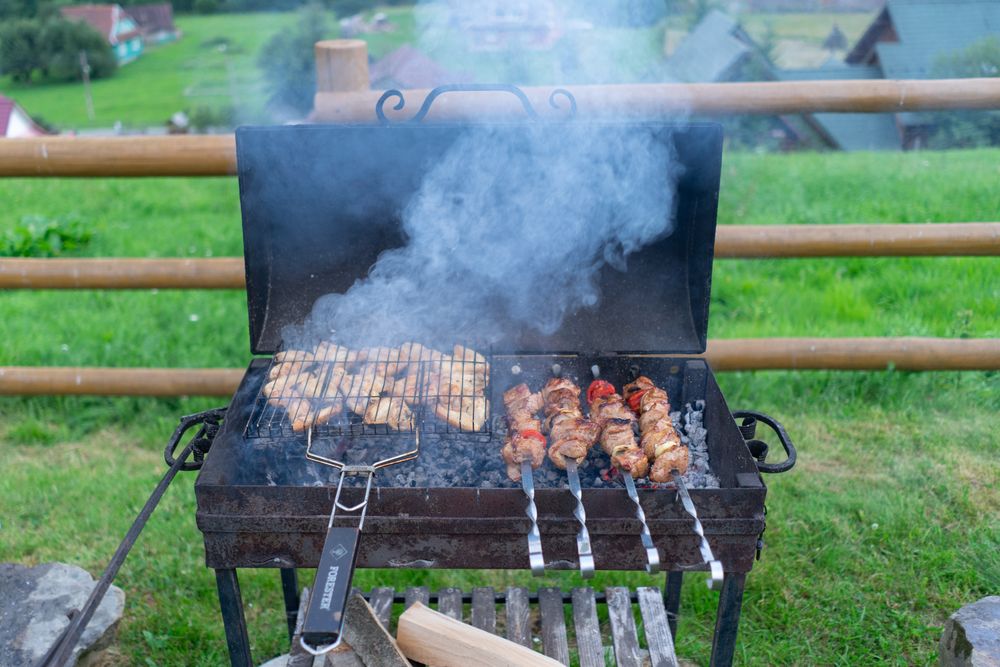
Cypriot Souvla on the Foukou
The Sunday cook of every Cypriot village. Big chunks of pork shoulder turning slowly over charcoal for two and a half hours, seasoned with almost nothing.
ShoulderCuban Lechon Asado
Pork shoulder marinated in mojo, which is sour orange, a great deal of garlic and oregano. Citrus and pork over charcoal, and very little else.
 Shoulder
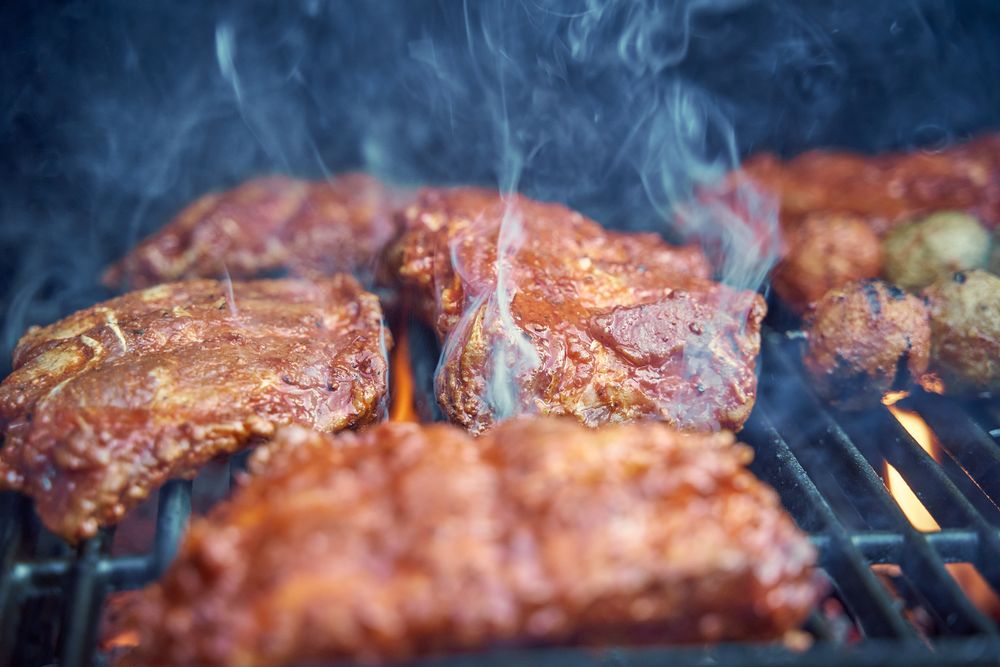
Char Siu, Chinese Barbecue Pork
The glossy red barbecue pork that hangs in Cantonese windows. Pork shoulder strips lacquered in a sweet, savoury glaze and cooked until the edges char.