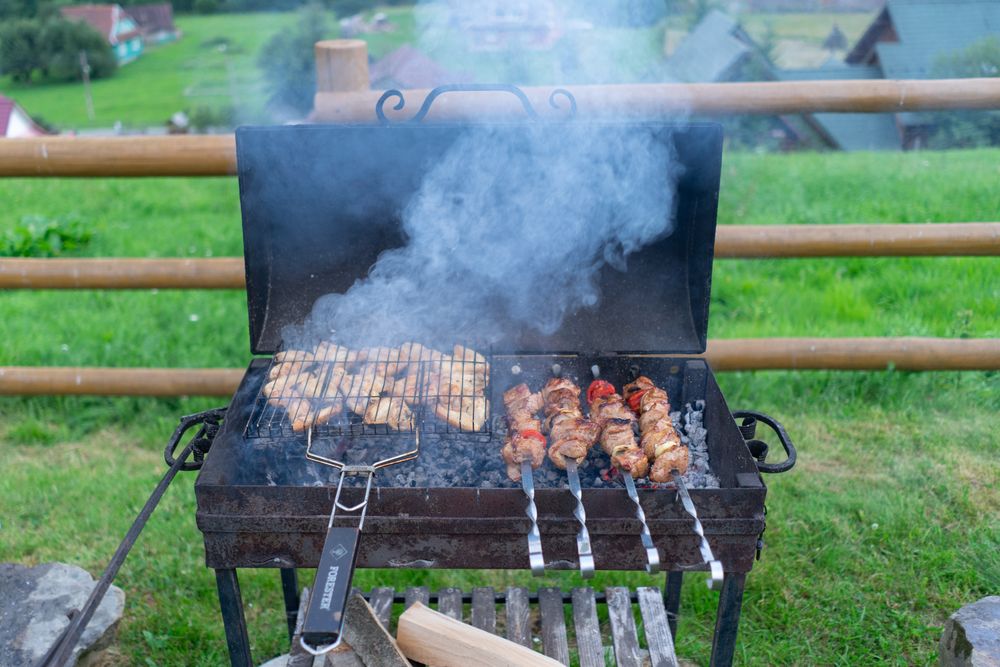
Cut pork shoulder into fist-sized chunks, thread onto a foukou spit, and turn over a wide charcoal bed set well away from the meat. Two to two and a half hours. Season with salt, pepper and dried oregano only, and squeeze lemon over at the end. Pull at around 85°C (185°F) when it pulls apart but still slices.
A long, wide, shallow bed of charcoal down both sides of the foukou trough, never directly under the meat at full intensity. Low and steady beats hot.
Method
Cut it big, and keep the fat
Souvla is not souvlaki. The pieces should be fist-sized, around 8cm, with the fat left on. Small pieces dry out over a two hour turn, and the fat is what bastes everything below it as it renders. Shoulder is the correct cut; loin will be sawdust.
Season simply and early
Salt, pepper and dried oregano, worked into every surface, an hour or two ahead. That is genuinely the whole seasoning. No marinade, no oil, no garlic paste. The point of souvla is pork, smoke and lemon, and anything else muddies it.
Load the spit properly
Thread the chunks onto the souvla skewer through the centre of each piece so the load is balanced, and push them together tightly. A loose or off-centre load wobbles, cooks unevenly and will wear out the motor. Slide bay leaves between chunks if you are using them.
Build the fire wide, not hot
Light a good quantity of charcoal and rake it into two long banks down the sides of the trough, leaving the centre directly under the meat comparatively clear. Souvla cooks in radiant heat from the sides, not in a blast from below. If flames are licking the meat, the fire is wrong.
Turn for two hours plus
Motor on, and leave it. Resist the urge to push the heat. You are looking for the outside to build a deep mahogany crust over roughly two to two and a half hours while the inside comes up slowly. Top up the charcoal at the ends of the banks as it burns down.
Check by feel, finish with lemon
The meat is ready when a chunk gives easily to a squeeze with tongs and the outside is properly crusted, around 85°C (185°F) inside. Slide it off the spit onto a board, cut into thick pieces, and squeeze a great deal of lemon over the top while it is still hot.
Notes worth knowing
- Cypriot oregano (rigani) is sold on the stalk and is far more pungent than supermarket oregano. Crush it between your palms over the meat.
- Lemon goes on at the end, never in a marinade. Acid on the meat for two hours before cooking turns the surface pale and firm.
- Serve with flatbread, sliced raw onion dressed in lemon, and pickled cauliflower. Not with barbecue sauce.
Common questions
What is the difference between souvla and souvlaki?
Size and time. Souvlaki is small cubes on a short skewer cooked in minutes over direct heat. Souvla is large fist-sized chunks on a long rotisserie spit cooked slowly for two hours or more. They are different dishes that share a root word.
Can I cook souvla without a foukou?
You can approximate it with a rotisserie ring on a 57cm kettle, banking the coals to the sides rather than underneath. It works, but a kettle's small diameter puts the meat much closer to the fire, so watch it and expect a shorter cook.
Which cut should I use?
Pork shoulder, sometimes sold as pork neck or collar, which is the traditional choice and the most forgiving. Lamb shoulder works the same way. Avoid anything lean.
Cook these next
 Shoulder
Charcoal Smoked Pulled Pork Shoulder
The most forgiving long cook in barbecue. A pork shoulder has so much fat and connective tissue that it tolerates almost every mistake you can make, which is why it should be your first project cook.
ShoulderCuban Lechon Asado
Pork shoulder marinated in mojo, which is sour orange, a great deal of garlic and oregano. Citrus and pork over charcoal, and very little else.
 Shoulder
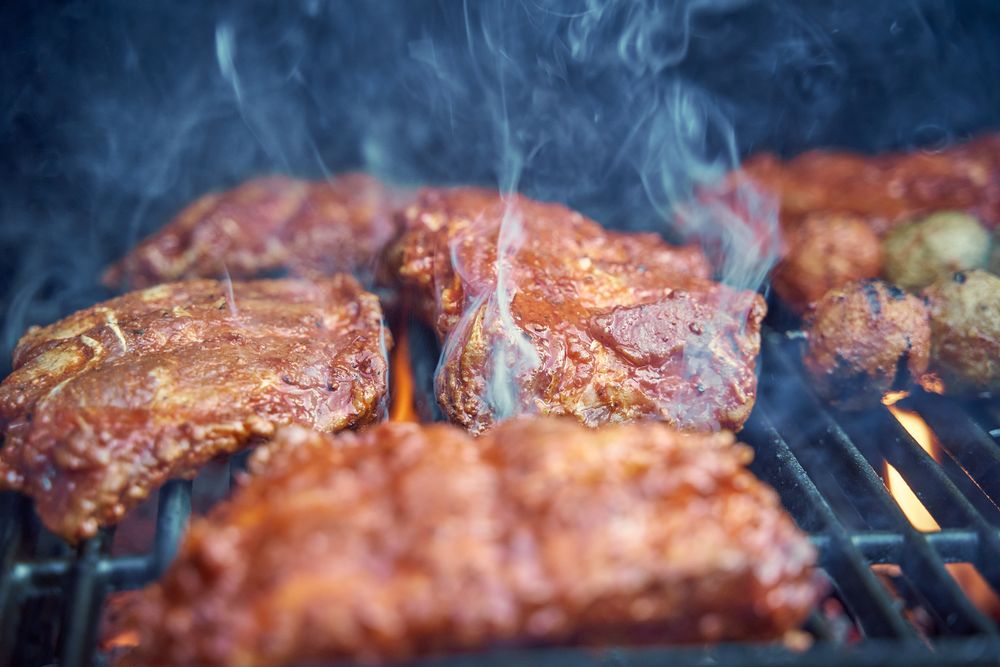
Char Siu, Chinese Barbecue Pork
The glossy red barbecue pork that hangs in Cantonese windows. Pork shoulder strips lacquered in a sweet, savoury glaze and cooked until the edges char.