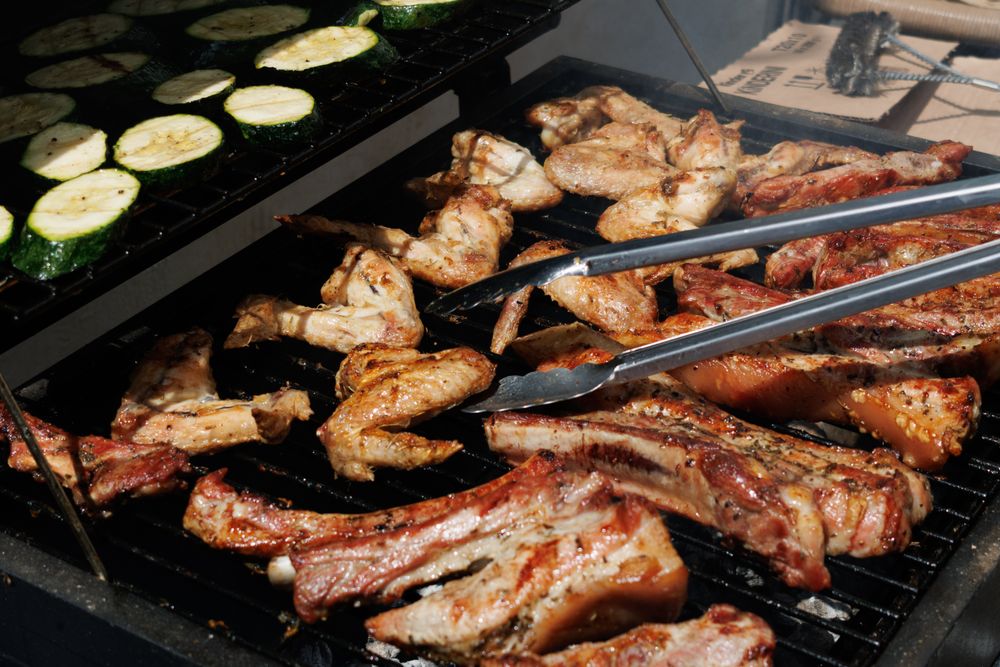
Pull the membrane, season, and smoke at 135°C (275°F) for about 3 hours until the bark is set. Wrap in foil with butter and a little liquid for 1 hour, unwrap, glaze, and finish 30 minutes. Done when they bend to nearly breaking and read around 90°C (198°F).
Snake method in a kettle, or Minion in a bullet, held at 135°C (275°F) with apple or cherry wood.
Method
Pull the membrane
On the bone side there is a thin silver membrane. Slide a butter knife under it at one end, grip it with a paper towel and pull it off in one sheet. It never breaks down during cooking, blocks smoke and seasoning, and eats like plastic. This is the step most people skip and should not.
Bind and season
Smear a thin layer of mustard over both sides. You will not taste it; it just holds the rub. Apply the rub generously on both sides and let the racks sit 20 minutes until the surface looks wet and tacky, which means it has bonded.
Set 135°C (275°F), not 105°C (225°F)
Build a snake or a Minion fire targeting 135°C (275°F). Baby backs are lean and small; at 105°C (225°F) they dry out before they tenderise. 135°C (275°F) is the right heat for this cut and cuts hours off the cook.
Smoke unwrapped for 3 hours
Ribs on, bone side down, on the indirect side. Add the wood chunks near the lit end. Leave them alone for three hours. The bark needs to set and colour, and every lid lift costs you temperature and time.
Wrap for 1 hour
Lay each rack meat side down on heavy foil with 2 tbsp of butter and a splash of juice or vinegar. Wrap tightly and return for one hour. This is a steam phase: it pushes through the stall and tenderises fast. It will soften the bark, which the next step fixes.
Unwrap, glaze, set
Unwrap carefully, drain the liquid, and put the racks back meat side up. Brush with barbecue sauce and give them 30 minutes uncovered for the glaze to tack up and the bark to firm again.
Test by bend, not by time
Pick a rack up with tongs a third of the way along. It should bow heavily and the surface should crack. If it stays stiff, it needs longer; if it falls apart, it went too far. Internal temperature lands around 90°C (195°F) to 95°C (203°F).
Notes worth knowing
- Fall-off-the-bone is overcooked by competition standards. Properly done ribs give a clean bite mark and pull away cleanly, not collapse.
- Baby backs come from the loin and are leaner and shorter than spare ribs. Spare ribs need roughly an hour longer.
- Skip the wrap entirely for a harder bark and a chewier rib. It is a legitimate style, it just takes about ninety minutes longer.
Common questions
What is the 3-2-1 method and should I use it?
Three hours smoke, two hours wrapped, one hour glazed. It was written for spare ribs at 105°C (225°F) and it consistently overcooks baby backs into mush. The 3-1-0.5 timing here at 135°C (275°F) is the better version for this cut.
Do I need to spritz ribs?
Not if you are wrapping. Spritzing cools the surface and extends the cook; its benefit is on long unwrapped cooks where the bark is drying out. For a wrapped rib cook it does very little.
Cook these next
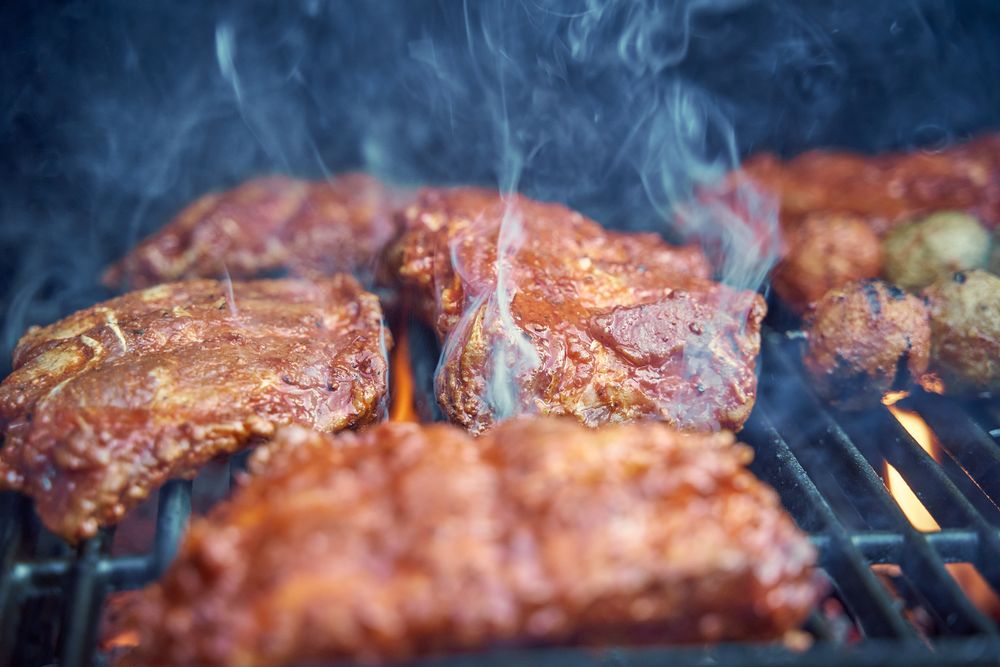 Short rib
Smoked Beef Short Ribs
Brisket flavour on a bone, and considerably harder to ruin. Plate short ribs are the single most impressive thing you can put on a charcoal cooker.
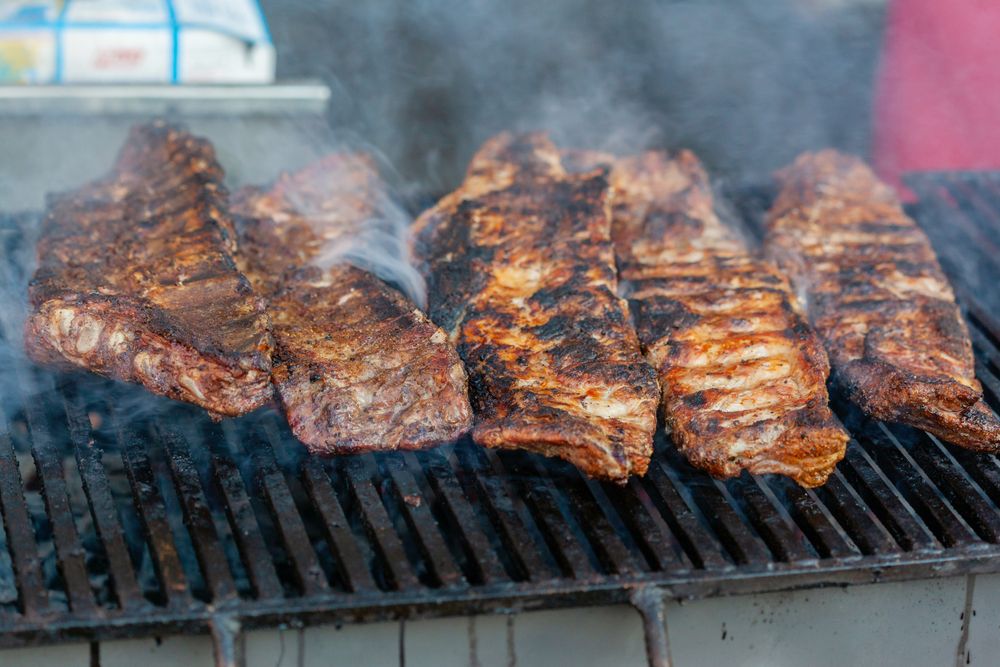 Shoulder
Charcoal Smoked Pulled Pork Shoulder
The most forgiving long cook in barbecue. A pork shoulder has so much fat and connective tissue that it tolerates almost every mistake you can make, which is why it should be your first project cook.
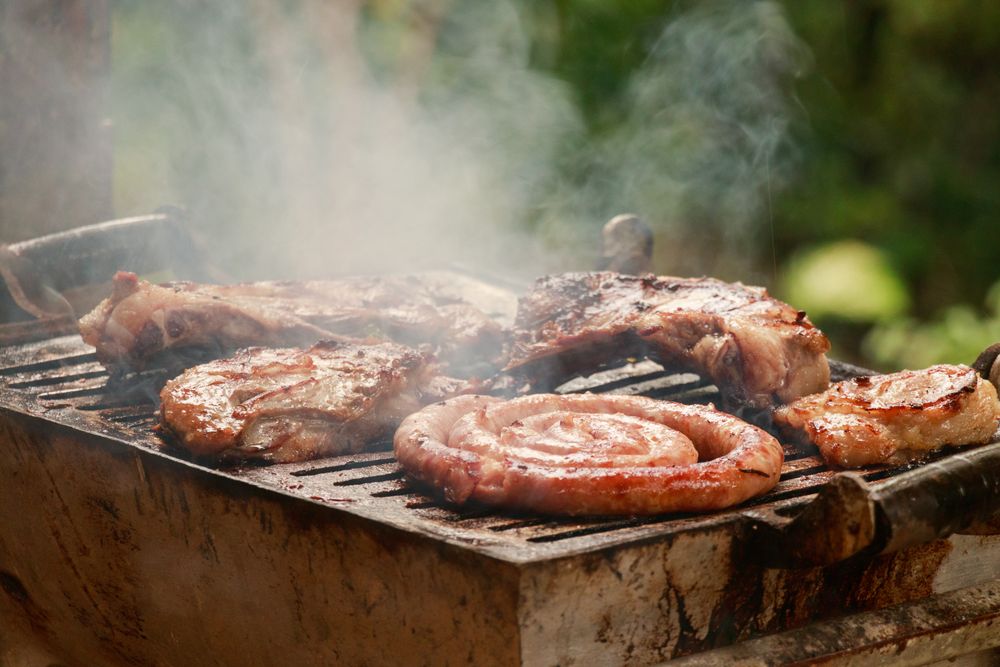 Pork belly
Pork Belly Burnt Ends
Cubes of pork belly smoked until the fat renders, then braised in butter and sugar until they glaze. Barbecue's answer to a confection.