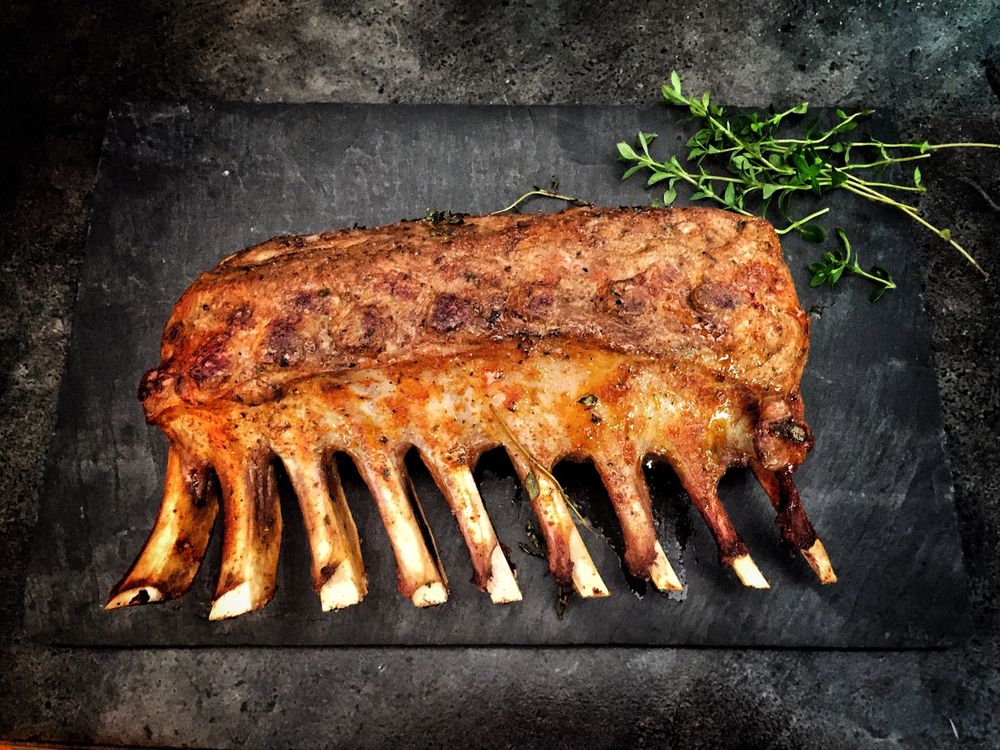
Marinate a butterflied leg overnight in garlic, rosemary, lemon and oil. Cook indirect at 190°C (375°F) for 30 minutes, then sear over the coals for 4 to 5 minutes a side. Pull at 55°C (130°F) at the thickest point. Rest 15 minutes and slice thin against the grain.
Method
Even out the thickness
A butterflied leg is naturally uneven. Cut into the thickest sections and open them out like a book, and score the thinner areas less. The flatter it is, the more of it lands at the same doneness. Some unevenness is useful though, since it gives you rare and medium in one piece.
Marinate overnight
Mix everything and work it into both sides and into every cut. Twelve hours in the fridge. Lamb takes garlic and rosemary better than almost any other meat, so be generous.
Bring it to room temperature
An hour out of the fridge before cooking. A cold four pound slab will char on the outside long before the middle is anywhere near ready.
Indirect at 190°C (375°F)
Bank the coals and put the lamb fat side up on the cool side, lid on. Around 30 minutes, until the thickest part reads about 45°C (115°F). Wipe off any loose marinade solids first or they will burn.
Sear over the coals
Move it directly over the bank. Four to five minutes a side, turning when it is deeply coloured and the fat has crisped. Expect flare-ups from the fat and oil, and move the meat rather than letting flames sit on it.
Pull at 55°C (130°F)
Probe the thickest section. 55°C (130°F) gives medium rare there, which means the thinner sections come out medium, which is usually what a table of eight actually wants.
Rest 15 minutes, slice thin
A large piece needs a real rest. Slice thinly against the grain, which runs in different directions across a butterflied leg, so check as you go. Serve the resting juices over the top.
Notes worth knowing
- Ask the butcher to butterfly it and to trim the heaviest fat and gristle seams. It is a fiddly job at home.
- Lamb fat solidifies unpleasantly as it cools, so serve this hot and on warm plates.
- Leftovers are excellent cold in flatbread with yoghurt, cucumber and lemon.
Common questions
Bone-in or butterflied?
Bone-in gives you a more impressive roast and juicier meat, but takes two to three hours and cooks unevenly around the bone. Butterflied is faster, easier to control, and gives far more charred surface, which is the best part.
What temperature should lamb be?
50°C (125°F) rare, 55°C (130°F) to 55°C (135°F) medium rare, 60°C (140°F) medium. Past 65°C (145°F) leg of lamb gets noticeably dry and the flavour turns muttony.
Cook these next
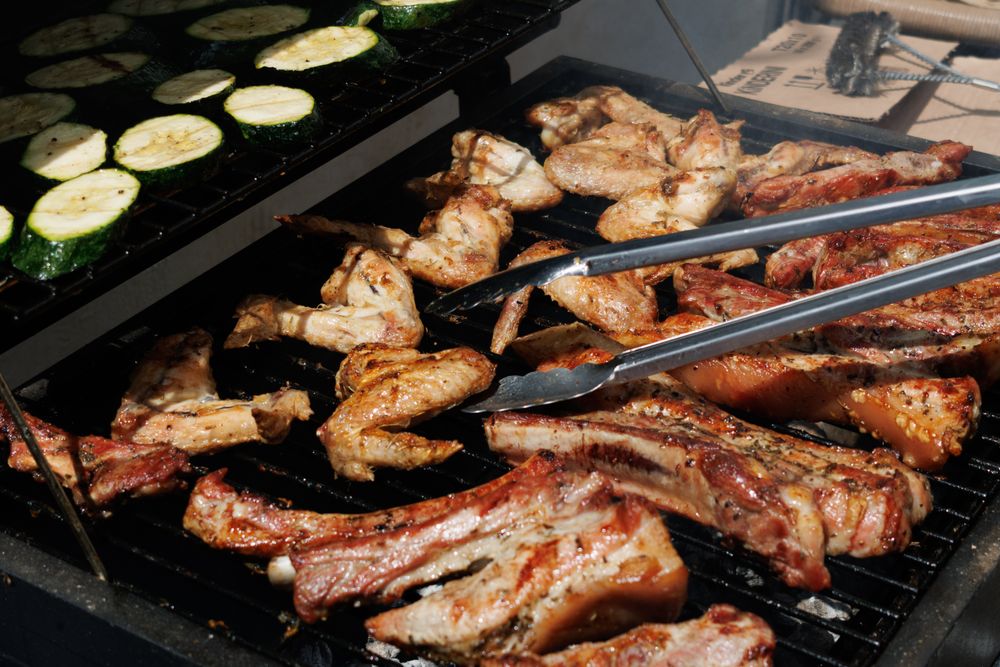 Chops
ChopsLamb Chops Straight Over the Coals
Fat, bone and a fierce fire. Lamb chops are one of the few things that genuinely benefit from the flare-ups everyone else spends their time avoiding.
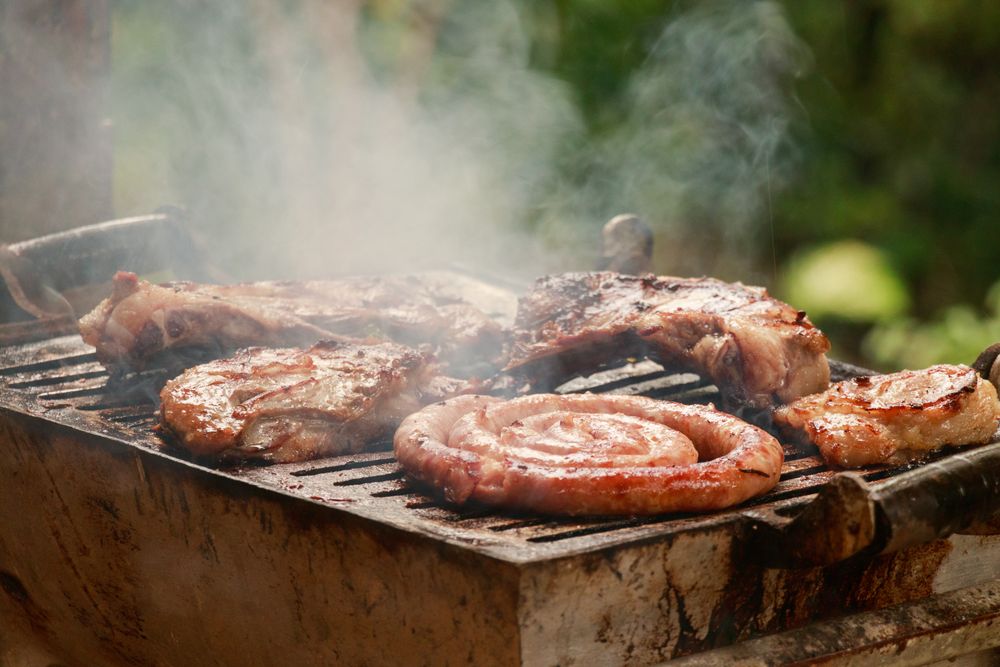 Sausages
Sheftalia, Cypriot Caul Fat Sausages
Minced pork and lamb wrapped in caul fat, which melts as it cooks and bastes the meat from the outside in. There is nothing else quite like them.
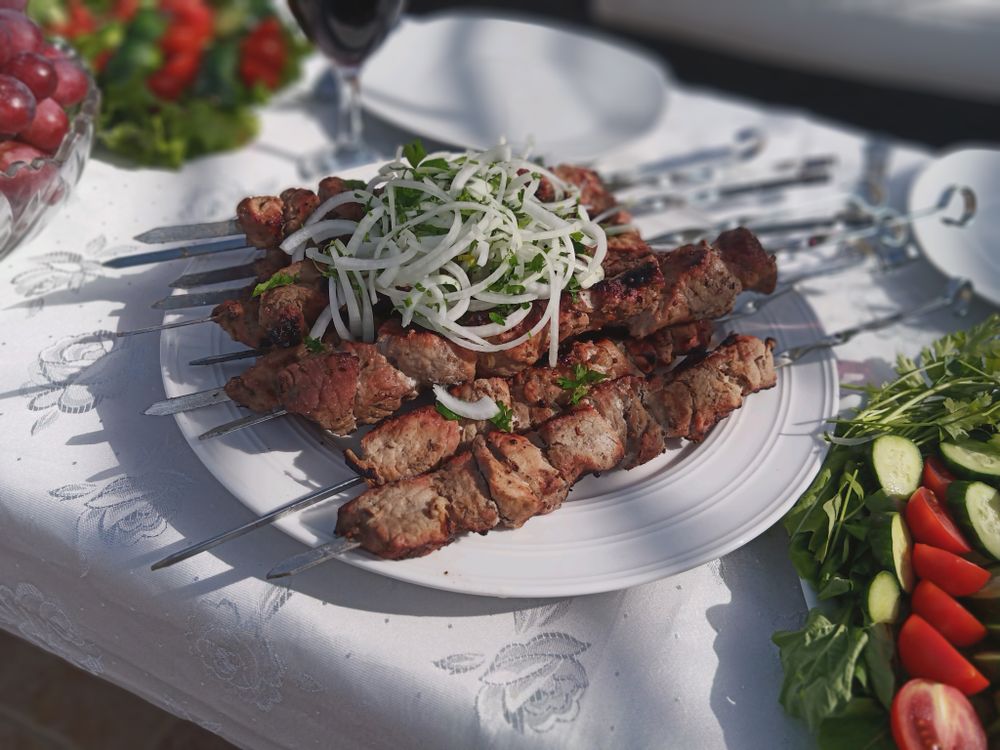 Skewers
Adana Kebab, Turkish Lamb Skewers
Hand-minced lamb with tail fat and red pepper, moulded onto wide flat skewers. The fat content is not negotiable and it is why this tastes like nothing you can buy.