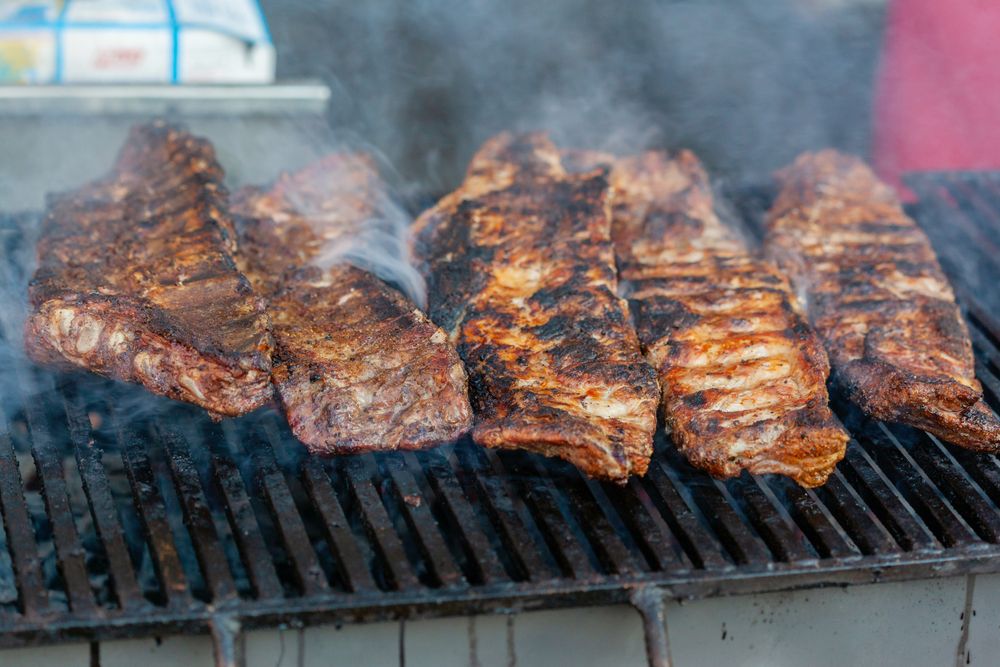
Brine 1.5 inch bone-in chops for 4 hours in a 6 percent salt solution. Cook indirect at 150°C (300°F) to an internal 55°C (135°F), then sear over the coals to 65°C (145°F). Rest 5 minutes. 65°C (145°F) is the correct final temperature and the pork will be faintly pink.
Method
Brine for four hours
Dissolve the salt and sugar in the water, add the aromatics, and submerge the chops. Four hours in the fridge is the sweet spot; overnight makes the texture spongy and slightly ham-like. Rinse and dry thoroughly afterwards.
Dry the surface properly
Pat them completely dry and leave them uncovered on a rack in the fridge for an hour if you have time. Brined meat is wet meat, and wet meat will not brown. This step is the difference between a crust and a steam.
Two-zone at 150°C (300°F)
Bank a moderate bed of coals to one side. You want around 150°C (300°F) on the indirect side. Season the chops with pepper only at this point, since the brine has handled the salt.
Indirect to 55°C (135°F)
Chops on the cool side, lid on, vent over the meat. Cook to an internal 55°C (135°F), around 20 minutes. Probe the centre of the meat, not near the bone, which reads cooler.
Sear both sides and the fat edge
Oil lightly and move them over the coals. Two minutes a side for colour, then hold each chop on its fat edge with tongs for a minute so the fat renders and crisps. Pull at 65°C (145°F).
Rest five minutes
The USDA safe temperature for whole-muscle pork has been 65°C (145°F) since 2011, with a three minute rest. It will be faintly pink in the centre and that is correct. Cooking to 70°C (160°F) is what made a generation believe pork was dry.
Notes worth knowing
- Thin chops cannot be reverse seared usefully. Under an inch, just sear hot and fast and pull immediately at 65°C (145°F).
- Bone-in beats boneless here. The bone slows the cook near it and gives you a wider window before overcooking.
- Do not brine pre-brined supermarket pork, often labelled as enhanced or containing a solution. It will end up unpleasantly salty.
Common questions
Is pink pork safe?
Yes. Whole-muscle pork is safe at 65°C (145°F) with a three minute rest, which leaves a faint pink blush. The old 70°C (160°F) guidance related to trichinella, which is effectively absent from modern commercial pork and is killed well below 65°C (145°F) anyway.
Does brining make meat juicier or just saltier?
Both, and the juiciness is real. Salt denatures muscle proteins so they hold more water and lose less during cooking. The effect is most useful on lean cuts like modern pork loin chops.
Cook these next
 Chops
ChopsLamb Chops Straight Over the Coals
Fat, bone and a fierce fire. Lamb chops are one of the few things that genuinely benefit from the flare-ups everyone else spends their time avoiding.
ChopsGrilled Pork Tenderloin
The leanest cut on the pig, which means it is easy to ruin and quick to cook well. A two zone fire and a thermometer are all it asks for.
RibsBaby Back Ribs on a Charcoal Kettle
The cook that teaches you fire management, because five hours at 135°C (275°F) on a kettle is entirely achievable and entirely on you.