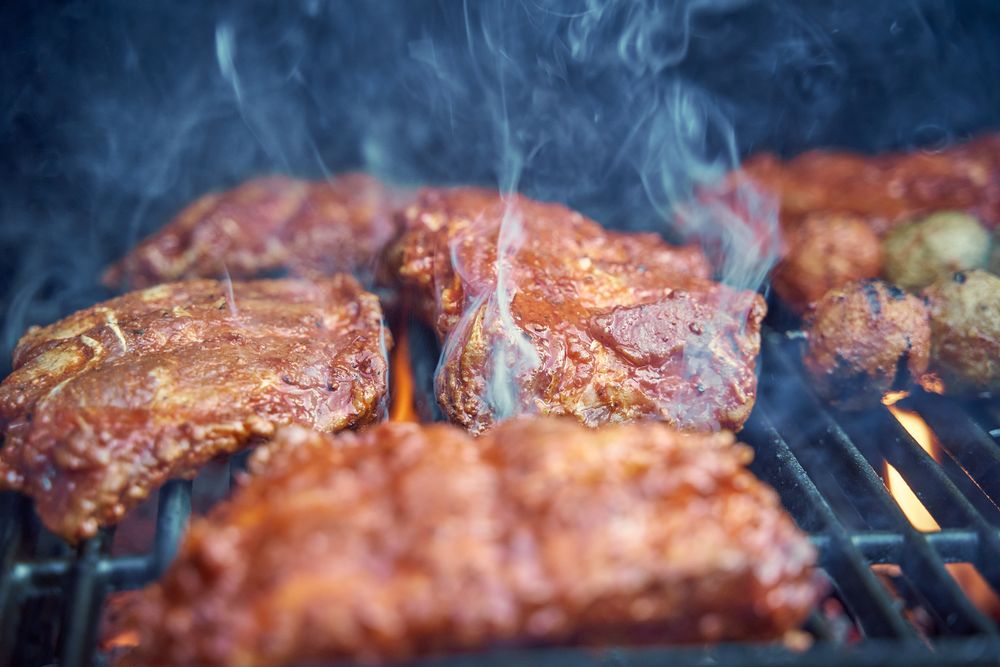
Use the snake method: unlit briquettes in a C around the outer edge, wood chunks along the first half, a water pan in the middle, and 8 to 10 lit coals on one end. Bottom vent a quarter open, top vent over the food. That will hold 105°C (225°F) to 135°C (275°F) for 8 to 12 hours.
Step by step
Choose the fuel arrangement
In a kettle, the snake method. In a bullet smoker, drum or kamado, the Minion method. Both do the same thing: keep most of your charcoal unlit and let a small fire creep through it slowly, instead of lighting everything at once.
Add wood at the start, not throughout
Three or four fist-sized chunks along the first part of the burn. Smoke adheres to a cool damp surface, and once bark has formed, further smoke does much less. This is why you do not need to keep feeding wood in.
Use a water pan
A foil tray of hot water inside the coal ring stabilises temperature, adds humidity that helps smoke stick, and catches drips that would otherwise flare. On a kettle it makes the difference between a fire you manage and one you fight.
Position the food away from the fire
Food goes on the far side of the grate from the lit end, so it is never over direct heat. Lid on, with the top vent directly above the food to draw smoke across it.
Set the vents low and be patient
Bottom vent about a quarter open, top vent about half. Let it settle for twenty minutes before making any judgement. Small adjustments, fifteen minutes apart, always with the bottom vent.
Measure at the grate and leave the lid alone
Clip a probe next to the food. Then do not open the lid for the first several hours: every opening costs you fifteen minutes of cook time and there is nothing to learn by looking.
What can you actually smoke on a kettle?
- Ribs, both baby back and spare. Comfortably the best starting point.
- Pork shoulder for pulled pork. Very forgiving, and a 12 hour snake handles it.
- Whole chickens and turkey, at a higher 150°C (300°F) to 165°C (325°F) for crisp skin.
- Beef short ribs and brisket, with the caveat that a full packer brisket may need trimming or bending to fit a 22 inch kettle.
- Cheese, nuts and salt, cold smoked using a smoke tube and no lit charcoal at all.
Kettle versus a dedicated smoker
A kettle running a snake will produce barbecue that is genuinely hard to distinguish from a dedicated smoker's. What it gives up is convenience and capacity: less room, a shorter maximum burn, more sensitivity to wind because there is no gasket, and a fiddlier refuel.
If you smoke a few times a year, a kettle is entirely sufficient and you should spend the money on a thermometer and better charcoal instead. If you are smoking most weekends, a bullet smoker will make it easier rather than better.
Why does my smoked food taste bitter?
- Too much wood. Three or four chunks is the right amount for a long cook.
- Smouldering rather than burning. Thick white smoke means insufficient oxygen and creosote deposition. Open the vents.
- The top vent is choked. Trapped stale smoke turns acrid. Keep it at least half open.
- Fat dripping onto bare coals and flaring repeatedly. Use a drip pan.
- Food put on before the coals had ashed over, so it absorbed the start-up smoke.
Common questions
Can you really smoke meat on a normal charcoal grill?
Yes. The snake method holds 105°C (225°F) to 135°C (275°F) for 8 to 12 hours in a 22 inch kettle, which covers brisket, pork shoulder and ribs. The limitation is capacity, not capability.
How long does smoke flavour keep developing?
Meaningful smoke absorption largely happens in the first two to three hours, while the surface is still cool and damp. Once bark has set, additional smoke contributes much less, which is why wood goes on at the start.
Do I need a water pan to smoke?
Not strictly, but it makes temperature far more stable and catches drips that cause flare-ups. On a kettle, where there is little thermal mass, it is worth the effort every time.
Related guides
 Technique
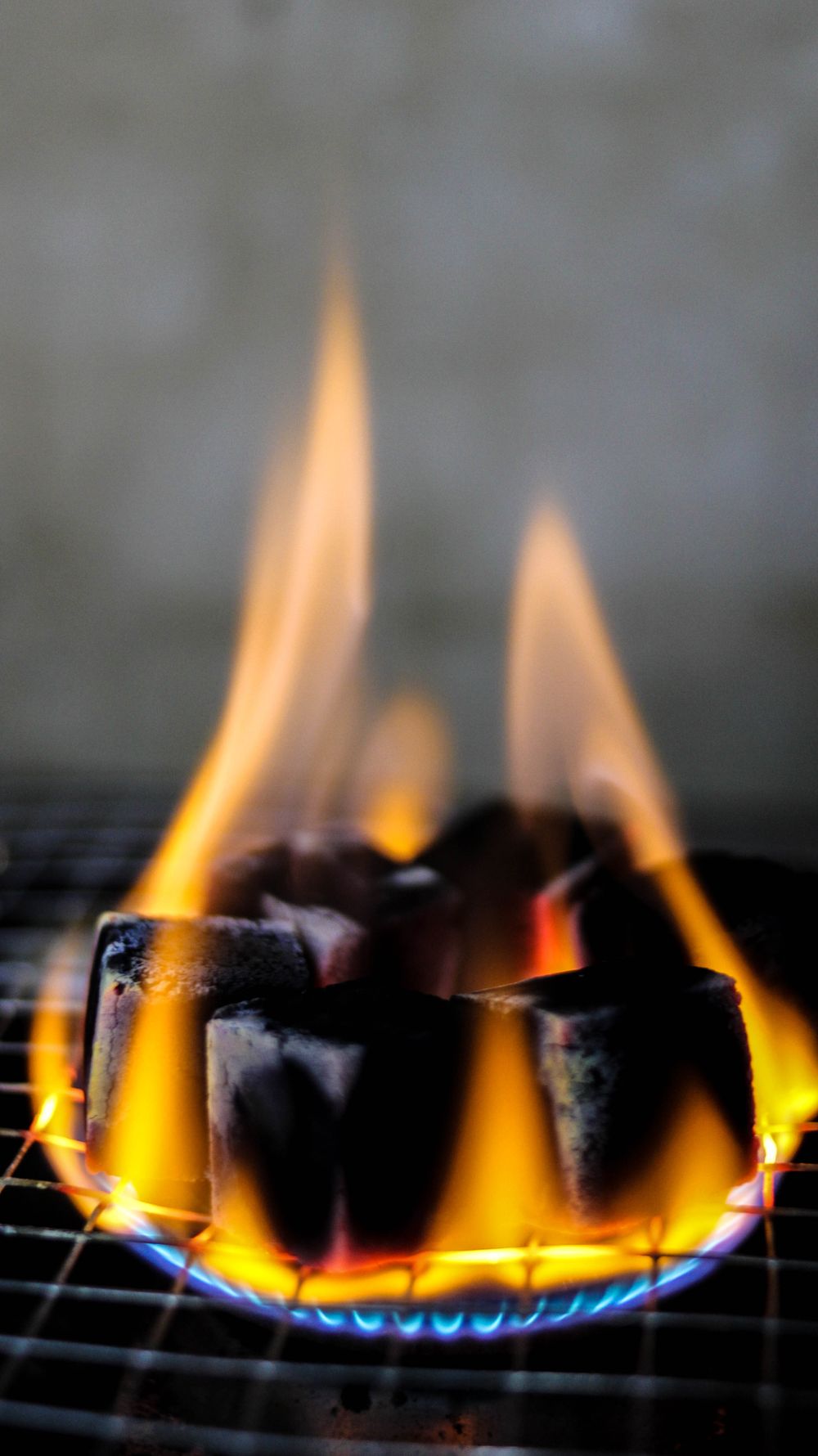
How to Light Charcoal Without Lighter Fluid
There is one right way to light charcoal, it costs about twenty five dollars, and it takes fifteen minutes.
 Technique
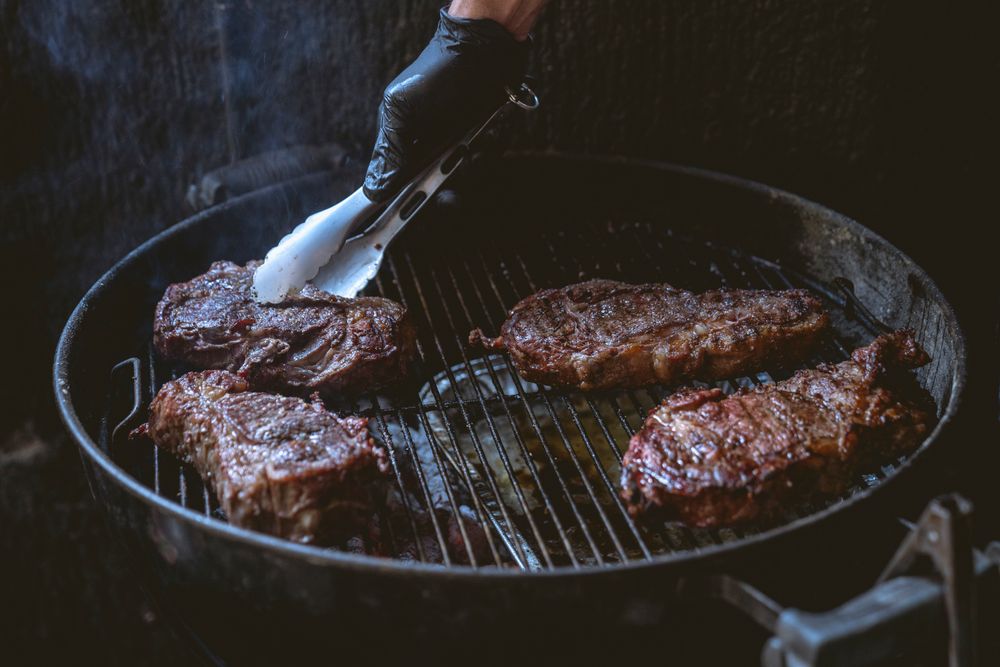
How to Set Up a Two-Zone Fire
One fire, two temperatures, and suddenly a charcoal grill can do everything an oven and a frying pan can do together.
 Technique
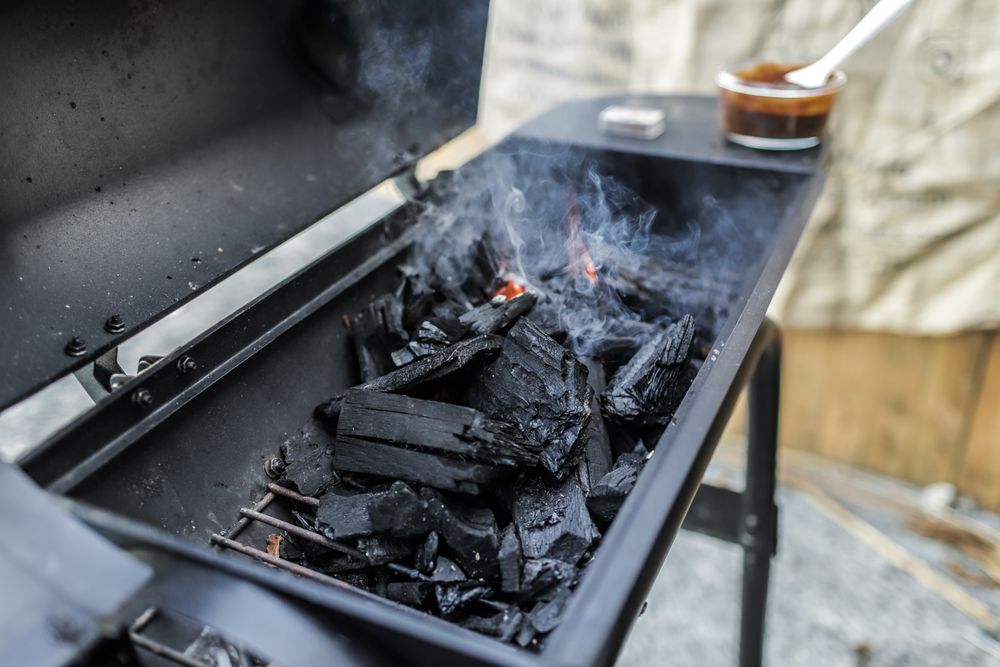
The Snake Method: Low and Slow on a Kettle
A line of unlit briquettes, lit at one end, burning along at about an inch an hour. It is the cheapest smoker you will ever build and it is already inside your kettle.